Choosing to travel abroad for minimally invasive foot surgery raises very practical questions: how many days off work should you plan, when can you walk again, and when is it safe to board a plane home? This article gathers concrete reference points on recovery, rehabilitation, and travel logistics, so you can prepare your stay with fewer blind spots. The key idea to keep in mind: there is no single recovery duration. Timelines vary with the procedure chosen, your health profile, and how closely you follow your surgeon’s protocol.
Direct answer: Recovery after minimally invasive foot surgery is progressive. Protected weight-bearing with a special shoe often starts within the first days, while full recovery can take several weeks to several months depending on the procedure. Most teams advise waiting beyond the immediate post-operative period before taking a long flight, based on your surgeon’s assessment.
What Is Minimally Invasive Foot Surgery and Why Patients Go Abroad
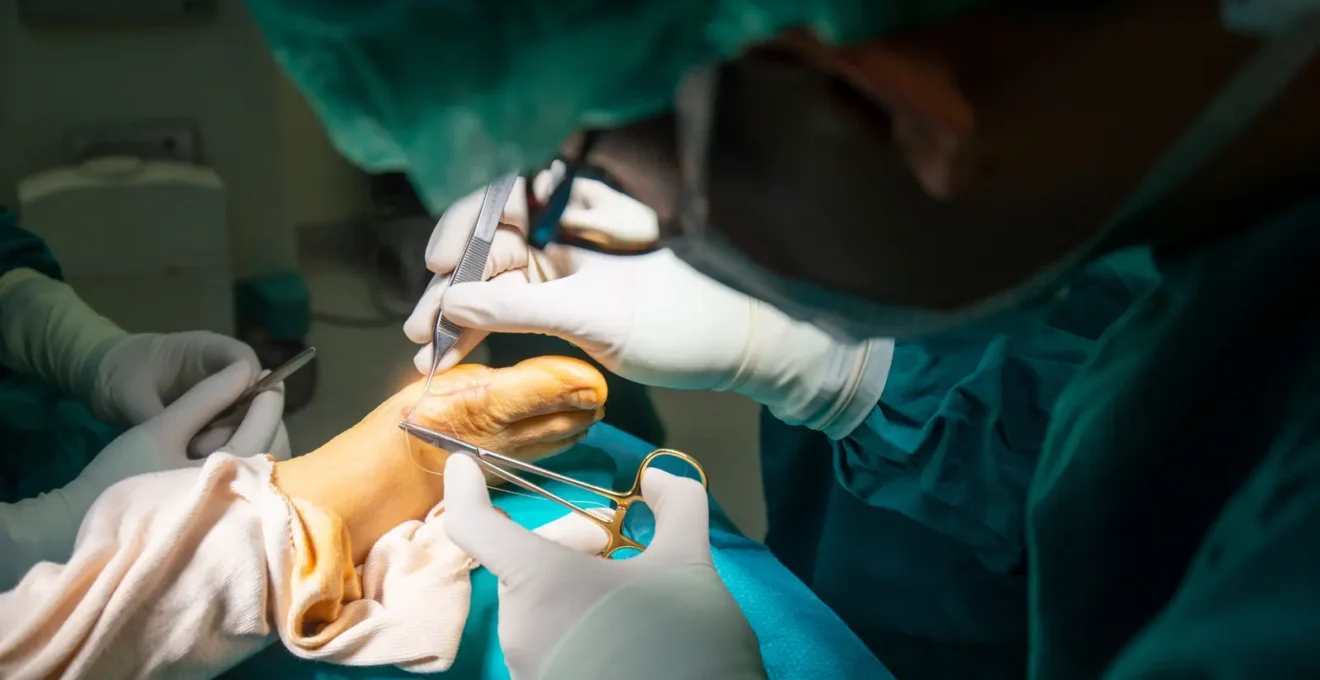
Minimally invasive foot surgery, also called percutaneous surgery, is a technique in which the surgeon operates through very small incisions, often only a few millimetres long, using specific instruments guided by X-ray imaging during the procedure. Compared with traditional open surgery, which requires a longer incision and more extensive dissection of soft tissues, the percutaneous approach aims to limit surgical trauma to the skin, tendons, and surrounding tissues.
The technique is frequently used for forefoot conditions such as hallux valgus (commonly known as a bunion), hammer toes, or certain painful bony prominences. In many cases, it is performed as outpatient surgery, meaning the patient enters and leaves the hospital on the same day. This ambulatory setting has grown steadily in recent years for foot and ankle procedures: data published by the French DREES report on ambulatory surgery practices showed that the share of day-case surgery for foot and ankle interventions rose from 38.4 % to 59.2 % over the period studied, an increase of 20.8 points.
Patients often look at foot surgery abroad when no local specialist offers the minimally invasive technique they are looking for, when waiting lists are long, or when they want a structured pathway that combines consultation, surgery, and coordinated follow-up. The appeal lies less in the surgery itself than in the perceived shorter hospital stay, the smaller incisions, and the organised convalescence that some international care providers offer.
Terminology to know: “percutaneous” refers to a technique performed through the skin via tiny openings. “Minimally invasive” is a broader term that describes any approach limiting incision size and tissue damage compared with classic open surgery.
How Long Is the Recovery After Minimally Invasive Foot Surgery?
There is no single recovery duration for minimally invasive foot surgery. The timeline depends on the exact procedure performed, the severity of the initial deformity, your age and general health, and how carefully you follow the post-operative protocol. According to the French AFCP patient information sheet on hallux valgus, the delays depend on “the initial deformity, the intervention, the surgeon and the patient” — a reminder that any figure you read online remains indicative.
In broad terms, three distinct milestones should be separated:
- Return to light daily activities: often within the first days to weeks, with the surgical shoe and limited walking distances.
- Return to normal walking without the medical shoe: typically several weeks after the procedure, with progressive weaning as advised by the surgeon.
- Full recovery: including residual swelling, remodelling, and return to sports or demanding activities, which can take several months.
Recovery expectations in a nutshell
- Walking with a medical shoe is often possible early, but is not the same as being fully recovered.
- Swelling can persist for weeks or months, especially at the end of the day.
- Younger patients in good health usually progress faster, but individual response varies.
- Any resumption of sport or long walks should be validated by the surgeon.
Two patients with the same procedure can therefore follow quite different paths. A sedentary person with a moderate deformity may regain comfortable daily walking within a few weeks, while someone with a more advanced deformity, additional procedures, or specific risk factors may need longer. The honest answer is: ask your surgeon for a personalised timeline rather than relying on a single number.
Rehabilitation and Weight-Bearing Protocol After Surgery
Rehabilitation after minimally invasive foot surgery usually follows a progressive protocol centred on a special post-operative shoe and gradual return to weight-bearing. The AFCP information sheet on hallux valgus explains that, in many cases, “weight-bearing is generally permitted in the immediate aftermath of the intervention, often without rolling of the step”, with a medical shoe and sometimes crutches during the first days.
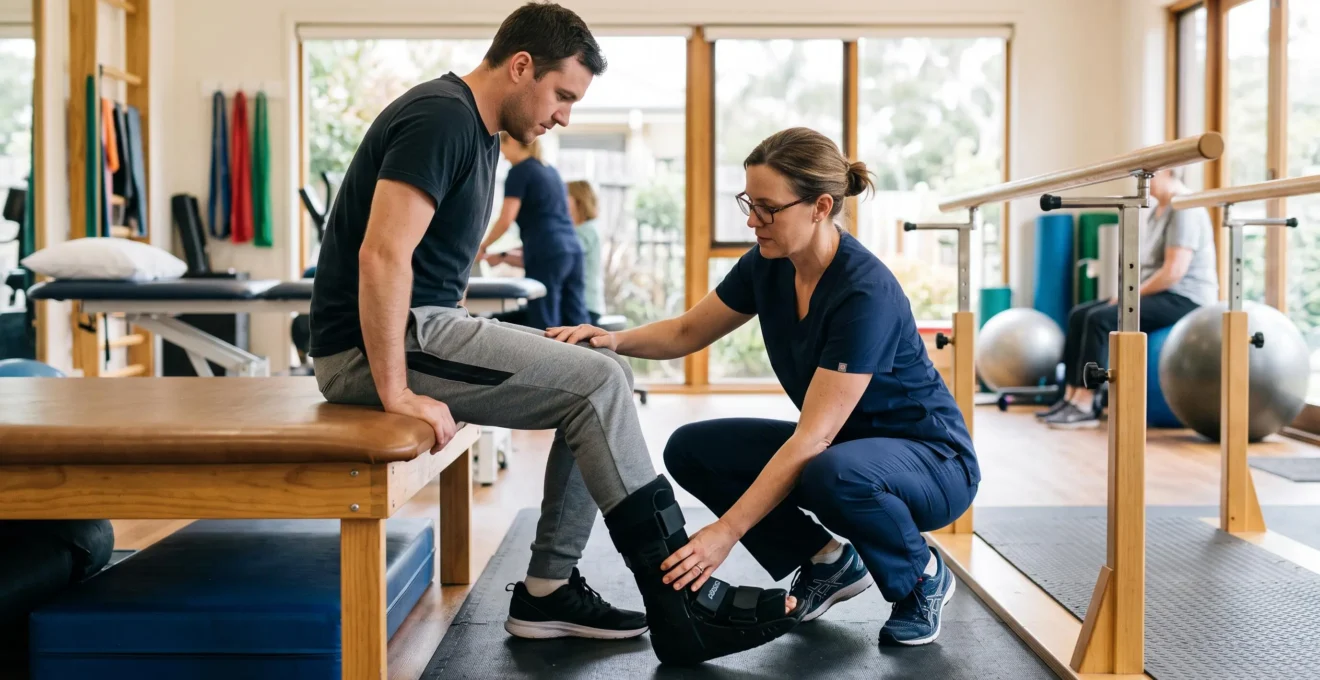
A typical progression after forefoot percutaneous surgery looks like this:
- Days 1 to 7 — early protected weight-bearingShort walks indoors with the post-operative shoe, foot elevation most of the day, ice as recommended, pain management as prescribed.
- Weeks 2 to 4 — gradual increase of activityLonger walks still with the medical shoe, dressing changes as scheduled, early mobility exercises if authorised by the surgeon.
- Weeks 4 to 8 — weaning off the shoeProgressive return to a wide, soft normal shoe, start of physiotherapy for toe mobility, gait, and swelling management.
- From month 2 onwards — functional recoveryReturn to work depending on the job, longer walks, and gradual reintroduction of impact activities only when validated by the surgical team.
Physiotherapy plays a key role in restoring toe mobility, rebuilding the push-off during walking, and reducing persistent swelling. Not every patient needs formal rehabilitation sessions, but a structured protocol — even in the form of home exercises — is usually recommended.
Respect the protocol to avoid setbacks: walking too much too soon, abandoning the medical shoe early, or skipping follow-up appointments can delay bone healing and increase the risk of complications. Any adjustment to the protocol should come from your surgeon, not from how you feel on a given day.
Planning Your Medical Trip: Consultation, Stay, and Post-Operative Follow-Up
Organising a surgical trip abroad means thinking of the care pathway as a sequence, not as a single operating-room appointment. A well-planned trip usually starts weeks before departure and continues long after you have come home. The clearer the sequence, the easier it is to anticipate costs, time off, and logistical help.
The typical pathway includes several steps:
- Pre-operative assessment: remote consultation with the surgeon, sharing of medical history, recent imaging (X-rays, sometimes other examinations), and clarification of the proposed technique.
- On-site stay: arrival one or two days before surgery for in-person consultation and pre-operative checks, outpatient surgery, then a few additional days for the first post-operative review, dressing, and walking instructions.
- Return home: departure once the surgical team confirms you are fit to travel, with written instructions, medications, and a clear schedule for future contact.
- Follow-up at home: teleconsultations with the operating team, coordination with a local healthcare professional for dressings or physiotherapy, and sharing of control imaging when required.
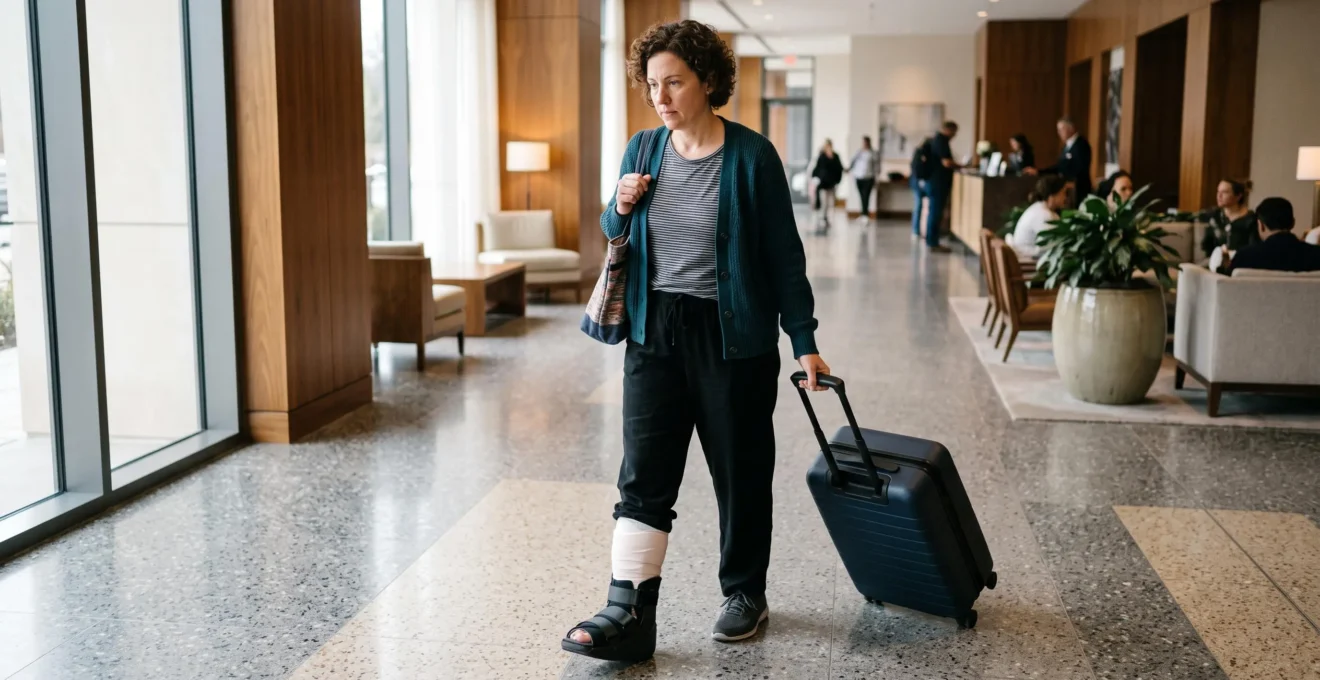
The question of flying home deserves particular attention. The French Assurance Maladie page on preventing phlebitis indicates that a flight exceeding four hours can favour deep vein thrombosis, and lists recent surgery (less than four weeks) among the risk factors to consider. This does not forbid flying, but it does mean the departure date, the length of the flight, and any preventive measures (hydration, movement, compression as advised) should be discussed with your surgeon rather than decided alone.
Structured international care providers typically coordinate this entire sequence. A pathway such as the one offered by International Elite Care illustrates how pre-operative consultations, hospital admission, local accommodation, transport, and remote follow-up can be organised as a single journey — which does not replace clinical judgement, but reduces the number of logistical decisions you have to make while recovering.
Illustrative case
Consider a hypothetical patient with painful hallux valgus, aged 52, in good general health. After a remote consultation and review of recent X-rays, the surgical team proposes percutaneous correction. The patient arrives two days before surgery for the in-person assessment, has outpatient surgery, and stays several additional days for the first dressing and walking checks with the medical shoe. The flight home is scheduled only once the surgeon confirms it is appropriate, with specific advice on hydration and in-flight mobility. Back home, follow-up continues through teleconsultations and local dressing care. This scenario is illustrative only; the real schedule depends on each surgeon’s assessment.
Practical Travel Tips for a Smooth Recovery
Beyond the medical protocol, small logistical decisions make a real difference during the first days after surgery. Preparing them before you leave means you spend your energy on recovery rather than on last-minute problem-solving.
Before departure, think about mobility and comfort
- Pack a loose, soft shoe for the non-operated foot and clothing that is easy to put on while seated.
- Bring a small day bag you can carry while using crutches or a cane, with documents, medication, and a water bottle.
- Choose accommodation close to the clinic, ideally with a lift, step-free access, and short distances to a bathroom and food options.
- Arrange airport assistance and ground transport (wheelchair service, pre-booked taxi or shuttle) in advance.
During the stay, protect the operated foot
- Keep the leg elevated whenever possible, especially during the first days.
- Respect the walking distances agreed with the surgical team; the medical shoe is a protection, not a licence to walk normally.
- Note down any question that comes up and bring the list to each follow-up appointment on site.
Preparing the return trip
- Choose an aisle seat if possible, to make leg movements and short walks easier during the flight.
- Follow in-flight advice given by the surgeon regarding hydration, calf exercises, and compression if recommended.
- Plan help at arrival: someone to carry luggage, drive you home, and support the first 24 to 48 hours at home.
Preparing your home before leaving also pays off. Clearing floor obstacles, moving essentials to waist height, preparing simple meals in advance, and setting up a comfortable rest area with cushions for leg elevation all limit the risk of falls and reduce the physical effort of daily life once you are back.
For readers who want to think beyond the immediate recovery and work on long-term joint comfort, this resource on improving mobility long term after surgery offers a complementary perspective on what truly supports lasting flexibility, beyond classic stretching.
How long should I stay abroad before flying home after minimally invasive foot surgery?
The length of stay depends on the procedure, the first post-operative checks, and the duration of your flight. Short flights and long flights are not equivalent in terms of thrombosis risk after recent surgery, and the Assurance Maladie identifies flights longer than four hours as a specific factor. The departure date should be set with the surgical team, not improvised.
Can I walk after percutaneous foot surgery, and when?
In many forefoot procedures, protected weight-bearing with a special medical shoe is permitted from the immediate aftermath of surgery, as described by the AFCP. “Walking” in this context means short indoor walks with the surgical shoe, not normal walking. Returning to usual shoes and a regular gait takes several weeks.
How is post-operative follow-up organised after returning home?
Follow-up usually combines teleconsultations with the operating team, local care for dressings and physiotherapy, and periodic sharing of control imaging. Clarify this organisation before travelling: who you contact, how often, and what to do in case of unexpected symptoms such as persistent pain, redness, or fever.
Is it realistic to have surgery abroad and recover at home?
It is realistic when the pathway is planned as a sequence: remote assessment, on-site surgery and initial checks, validated travel home, and structured remote follow-up with local relays. The key is to anticipate each stage before departure rather than discovering constraints after the operation.
Minimally invasive foot surgery abroad can be a coherent option when the local offer is limited and when a structured pathway is available, provided you accept that recovery is progressive and personal. The most useful preparation is not to look for the shortest possible timeline, but to understand the protocol, plan the logistics, and choose a care pathway where every step — from the first consultation to follow-up at home — is clearly defined by the medical team.