Well-being & Relaxation
The pursuit of health frequently fixates on rigid nutritional rules or intense physical activity, yet a staggering number of adults remain chronically exhausted. This disconnect occurs because true vitality cannot exist without dedicated practices for nervous system regulation and mental recovery. Understanding how to actively rest is no longer a luxury; it is a physiological necessity for long-term health and emotional resilience.
This comprehensive overview explores the foundational pillars of genuine rest. From hijacking your autonomic nervous system through precise breathwork to redesigning your sleep environment, we will unpack actionable, science-backed strategies to build a sustainable wellness routine that fits seamlessly into a demanding modern schedule.
Building Sustainable Wellness Routines
A common pitfall in the journey toward better health is the all-or-nothing approach. Many individuals attempt a complete lifestyle overhaul, only to find their motivation collapsing after just three weeks. The secret to lasting change lies in frequency rather than intensity.
Overcoming the Three-Week Slump
When starting a journey of holistic change, the brain initially thrives on the dopamine hit of a new project. However, as this novelty fades, old neural pathways reassert themselves. To survive this critical period, you must shift your focus from massive weekend wellness binges to consistent micro-habits. Daily ten-minute practices consistently outperform sporadic, hours-long interventions because they regularly signal safety to your body, gradually lowering baseline cortisol levels.
Designing Rituals for Busy Schedules
You do not need an empty calendar to cultivate peace. Integrating recovery into a packed day requires strategic placement rather than abundant time. Consider these highly effective micro-interventions:
- Two-minute recovery windows: Use the transition time between back-to-back meetings to step away from the screen, stretch, and reset your posture.
- The twenty-minute morning ritual: Before commuting, dedicate a brief window to hydration, light stretching, and intentional silence rather than immediately checking emails.
- Tech-free breaks: Schedule dedicated ten-minute blocks without screens to reduce the constant cognitive load of digital notifications and emails.
Demystifying Meditation for the Modern Mind
Meditation is frequently misunderstood as a practice of absolute mental silence. For a restless, constantly stimulated mind, attempting to stop thinking entirely is not only frustrating but counterproductive. The true goal is observation, not elimination.
Why Stopping Thoughts is the Wrong Goal
If you have ever concluded that you simply cannot meditate, you are likely judging yourself against an impossible standard. The brain is biologically designed to generate thoughts. Effective meditation involves recognizing when you have become distracted and gently returning your focus to the present moment. This act of returning is the actual bicep curl for your brain, strengthening your capacity for focused attention over time.
Choosing the Right Meditation Style
Different neurological profiles respond better to different techniques. Finding the right fit is crucial for surviving the difficult first weeks of practice:
- Focused Attention: Concentrating on a single anchor, such as the breath or a specific sound. Ideal for those who feel scattered and need immediate grounding.
- Open Monitoring: Observing thoughts and bodily sensations as they pass without attachment. Excellent for processing complex or lingering emotions.
- Loving-Kindness: Directing compassion toward oneself and others. Highly effective for individuals struggling with harsh inner critics or interpersonal workplace stress.
The Science of Breathwork and Nervous System Regulation
Your breath is a unique bridge between your conscious mind and your autonomic bodily functions. By deliberately altering the pace and depth of your breathing, you can directly instruct your brain to shift from a stressed, sympathetic state to a calm, parasympathetic state.
Shifting from Chest to Diaphragmatic Breathing
Decades of sitting at desks and scrolling on phones have fundamentally rewired how most adults breathe, locking them into shallow, upper-chest respiration. This chronic chest breathing keeps the body in a subtle but perpetual state of alarm. Reawakening a dormant diaphragm is the first step toward genuine relaxation. By directing air deep into the belly, you massage the vagus nerve, which acts as the primary braking system for your body’s stress response.
Practical Techniques for Daily Stress
Different situations require different breathing protocols. Practicing safely as a beginner means matching the technique to your current level of arousal:
- The Physiological Sigh: Two quick inhales through the nose followed by a long, extended exhale through the mouth. This is the fastest method to calm down in under sixty seconds.
- Box Breathing: Inhaling, holding, exhaling, and holding again for equal counts. Highly effective for maintaining composure during high-pressure situations or right before a presentation.
- 4-7-8 Breathing: Inhale for four, hold for seven, exhale for eight. Perfect for winding down before sleep as it powerfully activates the parasympathetic nervous system.
Rethinking Movement and Restorative Practices
While cardiovascular exercise and strength training are vital, using high-intensity movement as your sole method of stress relief can backfire. If your baseline stress is already extremely high, adding a physically demanding power yoga class might simply pour more cortisol into an already exhausted system.
The Power of Restorative Yoga and Yoga Nidra
True physical recovery often looks like doing very little. Practices such as Restorative Yoga, Yin Yoga, and Yoga Nidra are designed specifically for deep cellular exhaustion. By lying still and fully supported by props—such as pillows and folded blankets you already own—you remove the need for muscular engagement. This complete physical surrender signals absolute safety to the brain, significantly improving your Heart Rate Variability (HRV) and allowing for profound physiological repair.
Authentic Self-Care Beyond the Surface
Commercial self-care heavily markets bubble baths and face masks. While pleasant, these activities rarely address the root causes of burnout. Authentic self-care requires a much deeper, more personalized approach that actively addresses what actually drains your energy daily.
Addressing Multidimensional Needs
A self-care routine that ignores your emotional, social, or spiritual needs will always feel incomplete. You must design a self-care menu that matches your specific type of exhaustion. If you are socially drained, true self-care might mean canceling plans to enjoy solitude. If you are emotionally depleted, it might mean having an honest conversation with a trusted friend. For parents, carers, or adults in the sandwich generation, making non-negotiable appointments with yourself—even for just fifteen minutes—is vital for sustaining the capacity to care for others without building resentment.
Optimizing Sleep and Environment
Sleep is the ultimate biological reset, yet modern environments are actively hostile to it. From light-polluted city flats to unpredictable work schedules, securing deep, restorative sleep requires deliberate environmental engineering and boundary setting.
Managing Light and Temperature
Light is essentially a free drug that dictates your energy, mood, and sleep cycles. Maximizing natural light exposure early in the day helps set your circadian rhythm, which is especially important in darker climates. Conversely, creating a thirty-minute wind-down routine in dim lighting signals to your brain that sleep is approaching. Additionally, the physical environment plays a massive role: dropping the temperature of your bedroom while keeping your body warm dramatically increases the likelihood of entering deep, uninterrupted sleep.
Navigating Disruptions and Partner Differences
Sharing a bed with a partner who has completely different sleep needs, or dealing with a noisy environment, requires practical adjustments rather than major renovations. Investing in high-quality earplugs, blackout curtains, or separate blankets can protect your rest without disrupting your relationship. Furthermore, avoid the trap of sleeping in extensively on weekends; this creates social jetlag and guarantees profound fatigue come Monday morning.
Ultimately, well-being and relaxation are not passive states you simply fall into; they are active skills that must be cultivated and protected. By moving away from quick fixes and embracing consistent, scientifically grounded habits—whether through mindful breathing, intentional rest, or optimizing your environment—you can build a resilient nervous system highly capable of navigating the complexities of modern life.

Why Bubble Baths and Face Masks Are Not Real Self-Care and What Actually Restores You?
Contrary to popular belief, effective self-care isn’t about indulgent treats; it’s a diagnostic practice that precisely matches a restorative activity to a specific type of energy drain. Commercial self-care often fails because it ignores the deep-seated need for emotional, social,…
Read more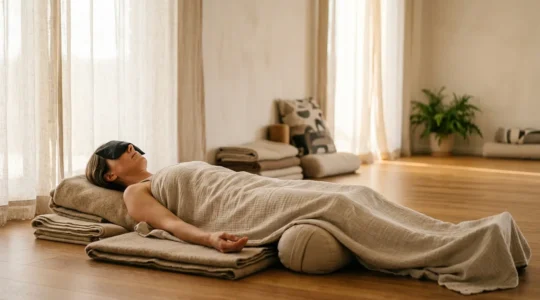
Why Active Yoga Classes Might Be Adding to Your Stress Rather Than Relieving It?
Contrary to popular belief, a stressed nervous system doesn’t need to be “sweat out”; it needs to feel safe enough to stand down. Vigorous yoga can keep a burnt-out body in a “fight-or-flight” state, deepening exhaustion. Restorative yoga uses props…
Read more
Why Breathing Into Your Chest Keeps You Stuck in Stress Mode All Day?
Chronic tension and anxiety are not just in your head; they are locked into your body by a dysfunctional breathing pattern you’ve been conditioned into by modern life. Shallow chest breathing is a deeply wired motor pattern, not a simple…
Read more
How Five Minutes of Conscious Breathing Can Reprogramme Your Nervous System
Your breath is the most powerful and immediate tool you have to take conscious control of your body’s stress response. Specific patterns like the ‘physiological sigh’ can reset your nervous system in under 60 seconds by directly influencing the vagus…
Read more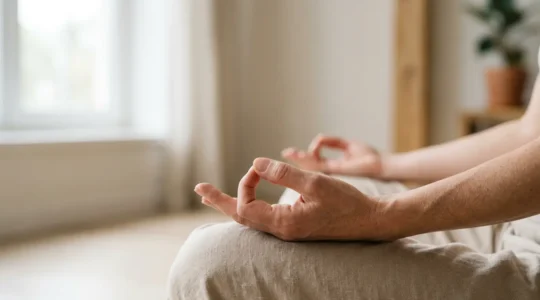
Why You Cannot Meditate and What Actually Works for a Restless Western Mind
Contrary to popular belief, the goal of meditation is not to silence your thoughts—it is to regulate your nervous system. This guide debunks common myths that cause people to quit and reveals that the key is not forcing stillness, but…
Read more
Why Your Wellness Routine Falls Apart After 3 Weeks and How to Build One That Lasts?
The reason your wellness routine fails isn’t a lack of willpower; it’s a flawed strategy of adding big, disruptive tasks to an already overloaded life. Focusing only on diet or exercise ignores the core issue: a depleted energy budget caused…
Read more