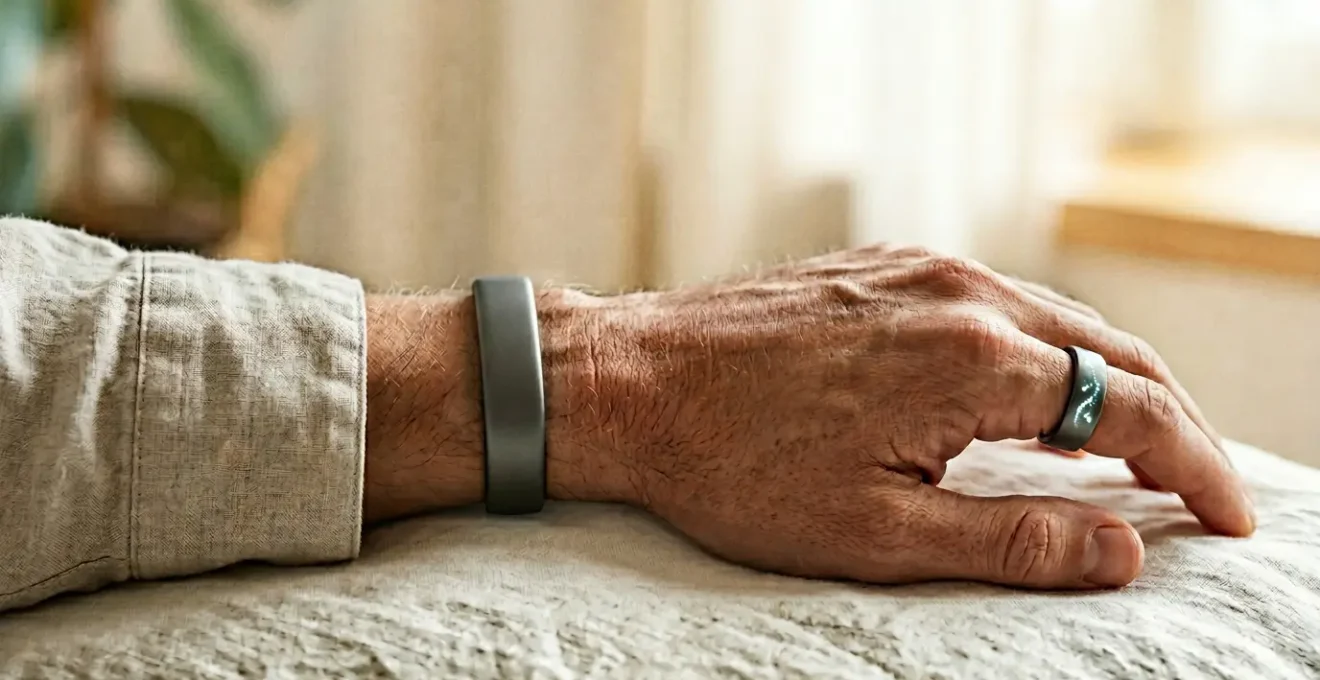
Chasing a high daily HRV score is the fastest way to create stress, not reduce it.
- The key is understanding your personal HRV trend over weeks, not fixating on anxious daily fluctuations.
- Your wearable’s accuracy matters immensely—some devices are far more reliable than others for capturing valid HRV data.
Recommendation: Start by tracking for 7 days without judgment to establish your unique baseline. This is your true starting point for meaningful optimisation.
You wake up, reach for your phone or check your smart ring, and see a number: your Heart Rate Variability (HRV). For a growing community of health optimisers and athletes across the UK, this daily ritual has become as routine as a morning coffee. But what does that number—be it an encouraging green or a concerning red—actually mean? Too often, we treat it like a grade on a test, a single data point that dictates whether we’ve been ‘good’ or ‘bad’. This leads to a cycle of confusion and anxiety, the very state we’re trying to manage.
The health tech market is saturated with wearables all promising to decode your body’s secrets. The common advice is to simply “get your HRV up”. You’re told to do breathing exercises, meditate, or take cold showers. While these can be effective tactics, they miss the fundamental point. They treat the symptom (a low score) without teaching you the language of the underlying system. The true power of HRV isn’t in chasing a higher number; it’s in understanding the narrative it tells about your body’s resilience and recovery capacity.
What if the most important shift wasn’t in your habits, but in your perspective? This guide moves beyond the simplistic “high is good, low is bad” mentality. It’s built on a single premise: HRV is not a score to be won, but a continuous conversation with your nervous system. By learning the language of this dialogue, you can stop being a passive recipient of data and become an active, confident interpreter of your own physiology. This is where you transform data points into durable, long-term health.
This article will guide you through that process. We will explore the science behind HRV, evaluate the tools to measure it, learn a robust framework for interpreting your daily readings without stress, and identify the most potent lifestyle changes that deliver real results. It’s time to turn data into wisdom.
Summary: A Guide to Mastering Your Heart Rate Variability
- Why the Variation Between Your Heartbeats Reveals Your Nervous System Health?
- Which HRV Tracker Actually Gives Reliable Readings: Oura, Whoop, or Apple Watch?
- How to Read Your Morning HRV Without Becoming Anxious About Every Low Score?
- The 5 Lifestyle Changes That Improve HRV More Than Expensive Biohacking Gadgets?
- How to Use Your Morning HRV to Decide Whether to Train Hard or Rest Today?
- Why the Stress That Keeps You Alert at Work Is Destroying Your Body Silently?
- When to Exercise, Drink Coffee, and Eat to Work With Your Cortisol Rather Than Against It?
- Why Your Cortisol Might Be Sabotaging Your Weight Loss, Sleep, and Energy?
Why the Variation Between Your Heartbeats Reveals Your Nervous System Health?
Heart Rate Variability doesn’t measure your heart rate; it measures the tiny, millisecond-level fluctuations in time between each consecutive heartbeat. A resting heart rate of 60 beats per minute doesn’t mean your heart beats precisely every second. It might be 0.9 seconds between two beats, and 1.1 seconds between the next two. This irregularity is not only normal; it’s a direct sign of a healthy, adaptable nervous system. This variability is orchestrated by your Autonomic Nervous System (ANS), the body’s ‘automatic’ control centre.
The ANS has two main branches. The sympathetic nervous system is your ‘fight or flight’ accelerator, preparing you for action and stress. The parasympathetic nervous system is your ‘rest and digest’ brake, promoting calm, recovery, and repair. A high HRV indicates a balanced state where the parasympathetic branch is dominant, showing your body is relaxed and ready to adapt to stressors. A low HRV suggests the sympathetic branch is in control, a sign of physical or psychological stress, illness, or fatigue. Your heart is being held in a rigid, metronome-like rhythm, ready for a threat that may not exist.
This dynamic balance is primarily regulated by the vagus nerve, a major component of the parasympathetic system that acts as a ‘brake’ on your heart rate. When you breathe out, the vagus nerve is stimulated, slowing the heart slightly. When you breathe in, this brake is released, and the heart speeds up. High HRV reflects a strong “vagal tone,” meaning your body’s recovery system is responsive and effective. Tracking HRV is therefore less about your heart and more about listening in on the real-time communication between your brain and your body’s core regulatory systems.

As this visualisation suggests, the connection between nerve signals and heart rhythm is an intricate dance. It’s a continuous feedback loop where your lifestyle, stress, and recovery directly influence the patterns of your heartbeat, offering a window into your internal state. Understanding this allows you to see HRV not as a random number, but as a direct reflection of your body’s resilience.
Ultimately, a higher HRV provides you with a greater capacity to handle whatever life throws at you, from an intense workout to a stressful meeting, and recover from it efficiently.
Which HRV Tracker Actually Gives Reliable Readings: Oura, Whoop, or Apple Watch?
To have a meaningful conversation with your nervous system, you need a reliable translator. Not all consumer wearables are created equal when it comes to measuring Heart Rate Variability. While most trackers can measure heart rate, capturing the precise, millisecond-level timing between beats required for accurate HRV (specifically the RMSSD metric) is a significant technical challenge. The gold standard is a multi-lead electrocardiogram (ECG), but for daily tracking, we need a practical and validated alternative.
The key differences between devices lie in their sensor technology (PPG vs. ECG), where they are worn (finger, wrist, chest), and when they take readings (continuously, during sleep, or on-demand). PPG (photoplethysmography) sensors, used by most wrist-based trackers, use light to measure blood volume changes. They are susceptible to motion artifacts, which can make wrist-based daytime HRV readings unreliable. Devices that measure during the stillness of sleep, or those using ECG technology, generally produce more trustworthy data.
For UK health optimisers deciding on a device, independent validation studies are critical. These studies compare consumer devices against medical-grade ECGs to determine their accuracy. The most important metrics are the Concordance Correlation Coefficient (CCC), where 1.0 is a perfect match, and the Mean Absolute Error, which shows the average size of the error. A recent independent validation study is particularly revealing for those seeking the most accurate data.
A 2025 independent validation study found the latest generation of devices have achieved remarkable accuracy. For instance, the Oura Ring Gen 4, which measures from the highly vascularised finger during sleep, demonstrated a near-perfect correlation with medical-grade equipment. The following table summarises the findings from this comprehensive analysis.
| Device | Concordance Coefficient (CCC) | Mean Absolute % Error | Accuracy Rating |
|---|---|---|---|
| Oura Ring Gen 4 | 0.99 | 5.96% | Highest |
| Oura Ring Gen 3 | 0.97 | 7.15% | High |
| Whoop 4.0 | 0.94 | 8.17% | Moderate |
| Apple Watch Series 6 | 0.98 | 6.6 ms underestimate | High |
| Garmin Fenix 6 | 0.87 | 10.52% | Lower |
This data highlights that while many devices are good, some offer a higher degree of precision. For an athlete or optimiser making daily decisions based on this data, choosing a device with a CCC of 0.95 or higher, like the Oura Ring or a recent Apple Watch (using its on-demand ECG feature), is a sound investment in data quality.
Ultimately, the best tracker is one that you will wear consistently. However, starting with a validated device ensures that the “conversation” you’re having with your body is based on a clear signal, not technological noise.
How to Read Your Morning HRV Without Becoming Anxious About Every Low Score?
The single biggest mistake in tracking HRV is overreacting to a single day’s score. Waking up to a ‘red’ or low number can trigger anxiety, ironically creating the very stress that lowers HRV further. The key to unlocking the power of this metric is to shift your focus from daily scores to weekly and monthly trends. A single low score is just noise; a sustained downward trend is the signal that requires your attention.
Your HRV will naturally fluctuate daily. A hard workout, a late meal, a glass of wine, or a stressful day at work will predictably lower your HRV the next morning. This isn’t a sign of failure; it’s a sign your tracker is working correctly. It’s reflecting the physiological cost of those stressors. The goal isn’t to have a perfect score every day, but to understand the context behind each score and observe how quickly your body bounces back. This is where your personal baseline and rolling averages become your most important tools.
As experts from the Hospital for Special Surgery in New York advise, a personalised approach is essential. In their guidance for athletes, they state:
It is better to follow your own individual trend of HRV over time to help you make decisions on any given day
– Medical experts at Hospital for Special Surgery, HSS Health Library – Heart Rate Variability Training Guide
To put this into practice, you need a simple, repeatable system for interpretation. Instead of a gut reaction to the daily number, use a structured protocol to separate the signal from the noise and make informed, calm decisions. This turns data into a tool for self-awareness, not a source of anxiety.
Your Action Plan: Interpreting HRV with Confidence
- Establish Your Baseline: Track your HRV daily for at least one full week, without making any major changes, to establish your personal baseline average and range.
- Use a 7-Day Rolling Average: Focus on the trend of your 7-day moving average. Is it trending up, down, or stable? This is a far more meaningful indicator of your overall readiness than any single day’s reading.
- Identify ‘Contextual Lows’: When you see a low score, tag it with the cause. Did you have a few drinks, eat late, or do a heavy leg day? Recognising these expected dips teaches you about your body’s response to specific stressors.
- Flag ‘Unexplained Lows’: A sustained decrease in your rolling average for 3-5 days without an obvious cause is a critical signal. This could indicate impending illness, chronic overtraining, or severe psychological stress. This is when you should prioritise rest.
- Focus on Long-Term Trends: The ultimate goal is to see your baseline HRV trend gradually upwards over months. This indicates a true improvement in your autonomic nervous system’s health and resilience.
This methodical process transforms HRV from a pass/fail test into a valuable, long-term dialogue about your body’s capacity and recovery needs.
The 5 Lifestyle Changes That Improve HRV More Than Expensive Biohacking Gadgets?
While the market is flooded with expensive red light panels, cryotherapy chambers, and complex supplementation protocols, the most significant improvements in HRV often come from mastering the fundamentals. These foundational lifestyle changes directly enhance parasympathetic (“rest and digest”) activity and build a more resilient autonomic nervous system. Before investing in high-tech gadgets, ensure these five pillars are firmly in place.
- Consistent Sleep Schedule: Your body’s recovery systems are most active during deep sleep. Going to bed and waking up at the same time every day—even on weekends—stabilises your circadian rhythm, which in turn regulates hormone release and autonomic function. A consistent sleep pattern is the single most powerful lever for improving your morning HRV score.
- Morning Sunlight Exposure: Viewing sunlight within the first hour of waking is a powerful signal to your internal body clock. It helps anchor your circadian rhythm, suppresses melatonin, and initiates a healthy cortisol awakening response. Just 10-15 minutes of outdoor light exposure (without sunglasses) can significantly improve sleep quality that night and, consequently, your overnight recovery and HRV.
- Zone 2 Cardio: While high-intensity training is a stressor that lowers short-term HRV, low-intensity aerobic exercise is a powerful tonic for the nervous system. Regular Zone 2 cardio (where you can hold a conversation) builds cardiovascular efficiency and has been shown to increase long-term baseline HRV. A 2025 systematic meta-analysis of 34 studies confirmed that long-term exercise interventions are one of the most effective ways to improve autonomic balance.
- Controlled Breathing Practices: You can directly influence your ANS through your breath. Slow, diaphragmatic breathing activates the vagus nerve and stimulates the parasympathetic system. You don’t need a complex protocol; just a few minutes a day can make a difference. In fact, research published in Psychophysiology demonstrated that breathing at a slow pace of around 6 breaths per minute for just 6 minutes can significantly boost parasympathetic activity.
- Early Last Meal (Time-Restricted Eating): Digestion is a metabolically demanding process that elevates heart rate and suppresses HRV. Finishing your last meal at least 3 hours before bedtime allows your body to complete digestion before you sleep, freeing up resources for repair and recovery. This leads to a lower resting heart rate and higher HRV during the night.

These interventions aren’t glamorous, but they are potent. They work by aligning your lifestyle with your body’s innate biological rhythms. Mastering these non-negotiable basics will yield far greater and more sustainable HRV improvements than any quick-fix biohack.
Focus on consistency with these five pillars, and your HRV data will reflect a body that is not just surviving, but thriving.
How to Use Your Morning HRV to Decide Whether to Train Hard or Rest Today?
This is the most practical application of HRV for any athlete or fitness enthusiast: using objective data to auto-regulate your training load. Instead of rigidly sticking to a pre-written plan, HRV allows you to adjust your daily effort based on your body’s actual state of recovery. This prevents overtraining, reduces injury risk, and ultimately leads to better long-term progress. The “Traffic Light System” is a simple yet powerful framework for this.
The system works by comparing your HRV score of the day to your established 7-day baseline. A score within your normal range means you’re recovered and ready for the planned session. A significant dip suggests your body is still dealing with stress (from a previous workout, poor sleep, or life in general) and would benefit from a less demanding day. This approach, known as HRV-guided training, has gained significant traction for its effectiveness.
This framework provides clear, data-driven rules for making daily training decisions. It removes the guesswork and emotion, replacing it with a disciplined, physiological approach.
- Green Light (At or Above Baseline): Your body is in a state of high readiness. This is the green light to proceed with your planned training at full intensity and volume. If you feel good, this is the day to push for a personal best or tackle the most demanding session of the week.
- Yellow Light (5-10% Below Baseline): Proceed with caution. Your body is carrying some residual fatigue. You should still train, but reduce the intensity or volume. Focus on technical skill, mobility, or an easier aerobic session. Avoid high-stress, maximal-effort lifts or intervals.
- Red Light (More than 10% Below Baseline): This is a clear stop signal. Your sympathetic nervous system is in overdrive, and your body is not ready for more stress. Pushing through on a red day is a recipe for overtraining, illness, or injury. Opt for active recovery only, such as a gentle walk, stretching, or taking a complete rest day.
Critical Warnings to Heed
There are two crucial scenarios where subjective feeling must override the data. High HRV + Feeling Unwell: If your HRV is high but you feel sick, tired, or sore, always listen to your body. This could be an early sign of your immune system fighting something off, a state that sometimes paradoxically elevates HRV before a crash. Rest. Low HRV + Feeling Great: This is the most dangerous trap. Your mind is willing, but your body is crying out for recovery. This is a classic sign of accumulated functional overreaching. Being disciplined enough to back off on these days is what separates good athletes from great, injury-free ones.
This system turns your HRV tracker from a simple data logger into a dynamic coaching tool, ensuring you apply stress when your body can handle it and recover when it’s most needed.
Why the Stress That Keeps You Alert at Work Is Destroying Your Body Silently?
In the modern workplace, a certain level of stress is often seen as a badge of honour. The “fight or flight” response, driven by the sympathetic nervous system, releases cortisol and adrenaline, making us feel sharp, focused, and productive in the short term. This is the state that helps you meet a tight deadline or nail a presentation. However, when this acute stress becomes chronic—a state of constant deadlines, long commutes, and an “always-on” digital culture—it begins to silently erode your physiological resilience.
Chronic work stress keeps your body in a persistent state of high alert. Your sympathetic nervous system remains dominant, and your parasympathetic “rest and digest” system never gets a chance to fully engage. This constant state of ‘on’ is directly reflected in a chronically suppressed Heart Rate Variability. Your body loses its adaptive flexibility, becoming stuck in a rigid, high-strung pattern. This isn’t a vague wellness concept; it’s a measurable physiological reality. In fact, specific workplace factors have been directly linked to poor autonomic function.
For example, a study published in Industrial Health found that demanding work schedules have a tangible impact. It revealed that working significant overtime (over 60 hours per month) and enduring long commutes (over 90 minutes per day) are strongly associated with lower HRV scores. This demonstrates that the daily grind of corporate life is inflicting a measurable, physiological toll, even if you don’t ‘feel’ burnt out yet.

The impact of this sustained autonomic imbalance is profound and systemic. As a research team noted in a recent meta-analysis, the link between stress, HRV, and long-term health is undeniable.
Chronic stress, which disrupts ANS balance, has been linked to both reduced HRV and an increased incidence of cardiovascular disease
– Research team analyzing psychological stress and HRV, Frontiers in Cardiovascular Medicine meta-analysis
This makes HRV a powerful biomarker not just for your physical training, but for your professional life, alerting you to the silent cost of an unsustainable work rhythm before it manifests as burnout or illness.
When to Exercise, Drink Coffee, and Eat to Work With Your Cortisol Rather Than Against It?
Optimising HRV isn’t just about what you do, but when you do it. Your body operates on a 24-hour internal clock, the circadian rhythm, which governs the release of key hormones like cortisol. Cortisol, often called the “stress hormone,” naturally peaks in the morning to promote wakefulness and alertness, and gradually declines throughout the day. Working with this natural rhythm, rather than fighting it, can have a profound impact on your stress levels and, consequently, your HRV.
Morning Exercise: Aligning intense workouts with your morning cortisol peak is a synergistic strategy. Your body is naturally primed for activity, with high energy levels and pain tolerance. A morning workout also helps regulate your circadian rhythm for the day ahead. Conversely, a high-intensity session late at night can elevate cortisol when it should be falling, disrupting sleep onset and sabotaging overnight recovery, which will be clearly visible in a lowered morning HRV.
Strategic Coffee Intake: The instinct to reach for coffee immediately upon waking is common, but it’s not optimal. With cortisol already at its peak, adding caffeine on top can blunt its effectiveness and increase tolerance. The best time for your first coffee is mid-morning, around 9:30-11:30 AM, after your natural cortisol levels have started to dip. This provides an energy boost when you actually need it, without interfering with your body’s innate hormonal cascade.
Time-Restricted Eating: Perhaps the most powerful timing strategy for HRV is to create a clear “off” period for your digestive system. As research from wearable data has shown, eating late at night is one of the biggest saboteurs of high-quality recovery. Your body cannot fully enter a parasympathetic “rest and repair” state if it’s still actively digesting food. This is not just theory; the data is clear.
Case Study: The Power of an Early Last Meal
Research and user data consistently show that eating at unexpected times has adverse effects on HRV. By finishing all food intake by the early evening (e.g., 7 pm), you give your body a longer overnight fasting and recovery window. This significantly reduces metabolic stress during the night. Wearable data from platforms like Whoop confirms that users who maintain consistent, early eating schedules exhibit measurably improved deep sleep quality and higher morning HRV scores, reflecting better autonomic regulation.
Furthermore, few substances disrupt autonomic balance as profoundly as alcohol. The temporary relaxation it provides comes at a steep physiological cost. As Whoop research data shows, one night of drinking potentially decreases HRV for up to five days as your body works to process the toxins and restore homeostasis. Understanding this delayed impact is crucial for anyone serious about their recovery.
These simple scheduling shifts require no extra money or effort, only intention, yet they can unlock significant improvements in your body’s ability to manage stress and recover effectively.
Key Takeaways
- HRV is a direct measure of your nervous system’s resilience, reflecting the balance between ‘fight or flight’ and ‘rest and digest’ states.
- To avoid anxiety, focus on your 7-day rolling average and long-term trends, not a single day’s score. Daily fluctuations are normal noise; trends are the meaningful signal.
- Mastering the fundamentals—consistent sleep, morning light, timed meals, and low-intensity cardio—is more powerful for improving HRV than any expensive gadget.
Why Your Cortisol Might Be Sabotaging Your Weight Loss, Sleep, and Energy?
If you’re struggling with stubborn weight loss, poor sleep, and flagging energy despite ‘doing everything right,’ the culprit might be a dysregulated cortisol rhythm, a condition directly reflected in and exacerbated by low Heart Rate Variability. Cortisol and HRV are two sides of the same coin, representing the interplay between stress and recovery. When this system is out of balance, it creates a cascade of negative metabolic effects that can sabotage your health goals.
A healthy cortisol pattern provides a robust morning peak for energy and focus, followed by a gentle decline throughout the day, reaching its lowest point at night to allow for deep, restorative sleep. Chronic stress—be it from overtraining, poor nutrition, work pressure, or emotional turmoil—disrupts this rhythm. It can lead to a state where cortisol is either chronically elevated or blunted and flat. This state of sympathetic dominance (low HRV) sends a constant ‘danger’ signal to your body, triggering several metabolic roadblocks.
First, it impacts your ability to lose weight. Chronically high cortisol promotes fat storage, particularly visceral fat around the abdomen, and can increase cravings for high-calorie, processed foods. Furthermore, the underlying state of low HRV is metabolically unfavourable. As cardiovascular medicine research demonstrates, a low HRV is directly linked to poorer insulin sensitivity and increased systemic inflammation. This makes it metabolically harder for your body to access and burn fat for energy, even if you are in a calorie deficit. You’re effectively trying to drive with the handbrake on.
This dysregulation also wrecks your sleep. An elevated cortisol level at night, a hallmark of a stressed system, prevents you from entering deep, restorative sleep stages. This poor sleep quality further raises cortisol the next day and suppresses HRV, creating a vicious cycle of fatigue and poor recovery. You wake up feeling unrefreshed, reach for more caffeine to get through the day, and struggle to wind down at night. Your energy levels become dependent on external stimulants rather than internal vitality. This isn’t just about feeling tired; it’s a state of profound metabolic debt that undermines every aspect of your health.
By using HRV as your guide, you can start implementing strategies that actively lower your metabolic stress, support a healthy cortisol rhythm, and rebuild your body’s innate resilience from the ground up.