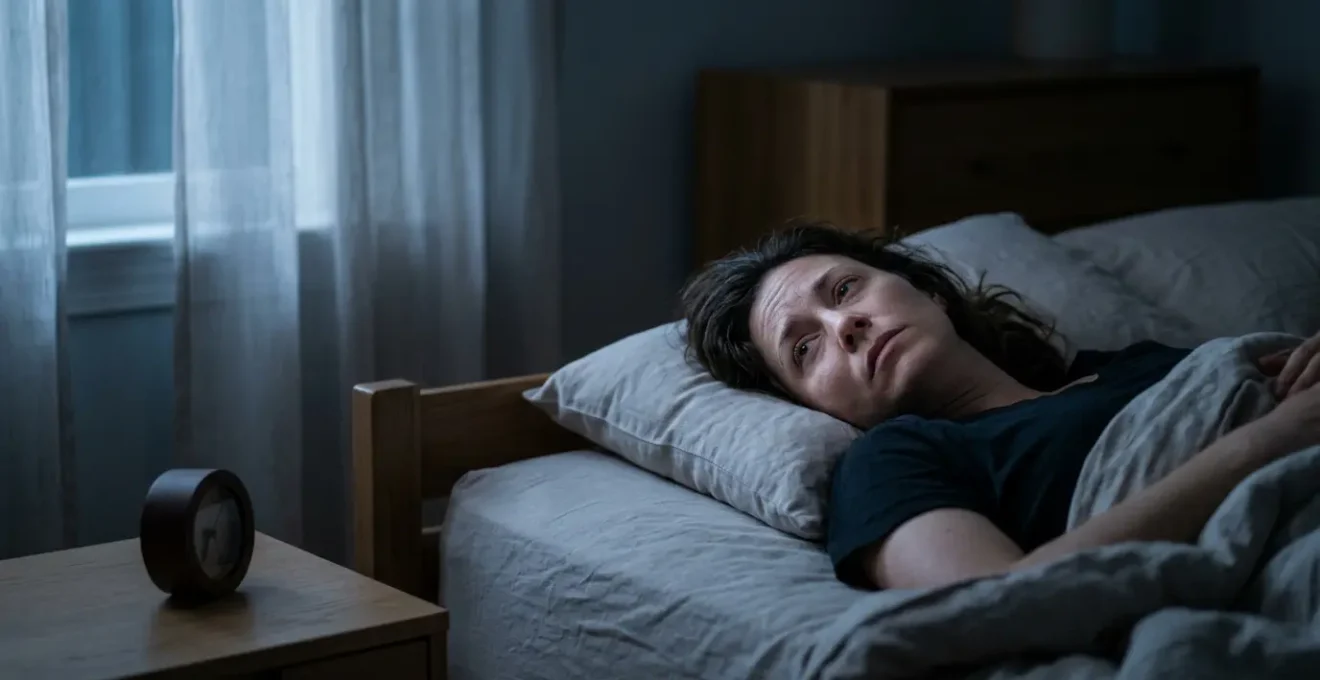
The frustrating reason you can’t sleep isn’t your lack of discipline; it’s a nervous system stuck in a state of high alert, making standard “sleep hygiene” ineffective.
- Basic advice fails because it doesn’t address the root physiological state of hypervigilance—your brain is constantly scanning for threats, even when you’re trying to rest.
- True progress comes from using targeted “physiological resets” that actively signal safety to your body, rather than just avoiding stimulants.
Recommendation: Shift your focus from perfecting sleep hygiene to implementing a 30-minute wind-down routine that directly activates your parasympathetic (rest-and-digest) nervous system.
You’ve done everything by the book. You avoid caffeine after noon, switch off screens an hour before bed, and your bedroom is a cool, dark sanctuary. You might even use a sleep tracker, diligently monitoring your stats. Yet, you lie awake, mind racing, or wake up at 3 a.m. feeling wired and exhausted. This experience is profoundly frustrating, often leading to the question: “What am I doing wrong?” The answer, for many UK adults who have exhausted the basics, is nothing. The problem isn’t your routine; it’s your physiology.
The standard sleep hygiene rulebook is built on sound principles, but it fundamentally fails when the underlying issue is a dysregulated nervous system. When you are in a state of chronic stress, your brain enters a state of hypervigilance. It’s an ancient survival mechanism, constantly scanning the environment for potential threats. In this state, your body is primed for action, not rest. Telling a hypervigilant brain to “just relax” is like telling a smoke alarm to ignore smoke. It’s biochemically impossible without first addressing the perceived threat.
This guide moves beyond the well-trodden path of sleep hygiene. We will not re-list the basics you already know. Instead, we will deconstruct *why* they fail and provide a more advanced, physiological-first approach. We’ll explore the science of nervous system regulation, the critical difference between sleep quantity and quality, and targeted strategies to signal safety to your brain. It’s time to stop trying harder with a broken model and start working smarter with your own biology to finally achieve restorative sleep.
This article provides an in-depth, specialist perspective on overcoming sleep difficulties when standard methods have failed. Below is a summary of the key areas we will explore to help you understand and resolve these complex issues.
Summary: Why Sleep Hygiene Is Not the Final Answer
- Why Avoiding Screens and Caffeine Does Not Help When Your Brain Will Not Switch Off?
- Why “Just Relax” Advice Makes Chronically Stressed People Feel Worse?
- Why Low Cortisol Causes Exhaustion That Coffee Cannot Fix?
- Why You Wake Up Exhausted Even After 8 Hours: The REM Sleep Connection?
- How to Create a 30-Minute Wind-Down Routine That Signals Sleep to Your Brain?
- How to Sleep Better in a Noisy, Light-Polluted UK Flat Without Major Renovation?
- How to Sleep Well When Your Partner Has Completely Different Sleep Needs?
- When Should Poor Sleep in the UK Warrant a GP Visit or Sleep Clinic Referral?
Why Avoiding Screens and Caffeine Does Not Help When Your Brain Will Not Switch Off?
The core premise of sleep hygiene—avoiding stimulants like blue light and caffeine—is to reduce arousal. But for someone whose nervous system is already in a state of high alert, or hyperarousal, these actions are like removing a single drop of water from a full bucket. The fundamental problem isn’t the external stimulant; it’s the internal, self-perpetuating state of vigilance. Your brain’s “threat detection” system is stuck in the ‘on’ position, actively looking for reasons to stay awake. In this state, even the silence of a dark room can become a source of anxiety as the brain fills the void with racing thoughts and worries.
This is compounded by a modern phenomenon known as “orthosomnia,” an unhealthy obsession with achieving perfect sleep. A 2024 study found that between 3% and 14% of adults using sleep-tracking devices show signs of this condition. The pressure to get “good scores” turns sleep into a performance, further fuelling the anxiety and hyperarousal that prevent it. The focus on hygiene rules creates a feedback loop: you fail to meet the “perfect” conditions, feel anxious about it, and this anxiety itself becomes the primary obstacle to sleep.
As the image above metaphorically illustrates, the brain can exist in two very different states. When you’re struggling to sleep, your neural pathways are often in that heightened, tense state on the right, not the calm, relaxed state on the left. The issue is so recognised in clinical practice that sleep hygiene is often seen as a baseline, not a cure. As the specialists at one leading UK clinic note, it’s a foundational step but rarely sufficient for chronic insomnia.
Sleep hygiene is often used as the ‘placebo’ control condition in insomnia treatment trials.
– The Sleep Sphere, CBT-I Cambridge and London Sleep Clinic
Ultimately, when your brain won’t switch off, the solution isn’t to add more rules. It’s to understand that your body is in a state of perceived danger and to learn techniques that actively signal safety, a topic we will explore in depth.
Why “Just Relax” Advice Makes Chronically Stressed People Feel Worse?
For someone in a state of chronic stress or hypervigilance, being told to “just relax” is not only unhelpful but can actively increase anxiety. This isn’t a psychological failing; it’s a predictable neurobiological response. Your autonomic nervous system is governed by different branches, primarily the sympathetic (“fight-or-flight”) and parasympathetic (“rest-and-digest”) systems. Chronic stress causes a durable upregulation of the sympathetic system. Your body is physically and hormonally primed for danger, and you cannot simply “think” your way out of it. Attempting to force stillness or mental quietude when your body is screaming “danger” creates an internal conflict that often amplifies the sense of agitation and failure.
The solution is not passive relaxation but active discharge. As the image above contrasts, trying to remain still when internally agitated (right) can feel like a cage. Instead, the body needs to complete the stress cycle through gentle, physical action (left). This can involve shaking out your limbs, pushing against a wall, or even just a brisk walk. These actions provide a physical outlet for the pent-up sympathetic energy, signalling to the brain that the “threat” has been dealt with. Only after this discharge can the parasympathetic system begin to take over, enabling true relaxation.
Polyvagal Theory, a key framework in modern trauma and stress science, explains this phenomenon. When the nervous system is stuck in a defensive state, it is biologically maladaptive. The Institute for Functional Medicine clarifies this perspective:
When the nervous system detects danger during a traumatic experience, a withdrawal of the parasympathetic system is initiated in the fight-or-flight response as a protective mode. In environments that are considered safe, a chronic fight-or-flight state is maladaptive and may lead to significant hypervigilant psychosocial distress and poor health outcomes.
– Institute for Functional Medicine, Polyvagal Theory and PTSD article
Therefore, when you can’t sleep, the first step isn’t to try and relax; it’s to help your body feel safe enough that relaxation becomes possible. This means moving away from commands and towards physiological signals.
Why Low Cortisol Causes Exhaustion That Coffee Cannot Fix?
A common symptom of a dysregulated nervous system is waking up feeling completely exhausted, a bone-deep weariness that even a strong coffee can’t touch. While many associate the stress hormone cortisol with high alert, chronic stress can lead to a dysfunctional pattern, particularly a blunted or low Cortisol Awakening Response (CAR). The CAR is a natural and essential spike in cortisol that should occur within 30-60 minutes of waking. This surge helps you feel alert, mobilises energy, and sets your body’s internal clock for the day. When this response is weak, you start the day feeling ‘behind’, as if your engine never truly turned on.
Trying to fix this with caffeine is a common mistake. Caffeine doesn’t create energy; it blocks adenosine, the neurotransmitter that signals sleepiness. When your issue is a lack of the “get-up-and-go” signal from cortisol, adding caffeine is like revving an engine that has no fuel. It can lead to a jittery, anxious feeling without providing true energy, followed by a deeper crash later in the day. This can further disrupt your body’s natural rhythm, worsening the problem over time.
The key is to support your body’s natural CAR instead of overriding it. This involves a specific morning protocol designed to provide the right signals at the right time. The focus is on light, food, and movement to gently and naturally encourage the cortisol spike you’re missing. Implementing these small habits can make a significant difference in your daytime energy levels and, consequently, your ability to sleep at night.
Here is a simple protocol to support your natural morning rhythm:
- Immediate bright light exposure: Get outside or near a window within 30 minutes of waking, even on cloudy UK days (10-15 minutes minimum).
- High-protein breakfast within 60 minutes: Aim for 25-30g of protein to stabilise blood sugar and prevent reactive energy crashes.
- Add a pinch of high-quality sea salt to morning water: This supports adrenal function and electrolyte balance, which can be compromised by a dysregulated HPA axis.
- Avoid caffeine for the first 90 minutes after waking: Allow your natural cortisol spike to occur before introducing stimulants. This prevents your body from down-regulating its own production.
- Engage in gentle movement: A 10-minute walk or stretching supports the natural circadian cortisol rhythm without triggering a new stress response.
Why You Wake Up Exhausted Even After 8 Hours: The REM Sleep Connection?
Logging a full eight hours in bed but waking up feeling groggy and unrefreshed is a classic sign that you are getting enough sleep *quantity* but not enough sleep *quality*. Sleep is not a monolithic state; it’s a complex cycle through different stages, including light sleep, deep sleep (NREM), and REM (Rapid Eye Movement) sleep. Each stage has a distinct and vital function, and disrupting the balance—known as your sleep architecture—can leave you feeling exhausted regardless of duration.
Deep sleep is crucial for physical restoration. It’s during this time that the body repairs tissues, builds bone and muscle, and strengthens the immune system. Crucially, it is when the brain’s waste clearance system is most active. As research in The Lancet Neurology explains, the glymphatic system, primarily active during deep sleep, flushes out metabolic byproducts like amyloid-β. Insufficient deep sleep means this “brainwashing” process is incomplete, leading to brain fog and that feeling of mental fatigue.
REM sleep, on the other hand, is essential for mental and emotional processing. It’s when your brain consolidates memories, processes emotions from the day, and supports learning. Suppressed REM sleep is linked to mood disturbances, difficulty concentrating, and a feeling of emotional fragility. Many common lifestyle factors can specifically disrupt this delicate sleep architecture.
Case Study: Alcohol’s Paradoxical Effect on Sleep Architecture
While a glass of wine might seem to help you drift off, it has a notoriously disruptive effect on sleep quality. Alcohol acts as a sedative initially, often reducing the time it takes to fall asleep. However, clinical practice in cognitive behavioural therapy for insomnia (CBT-I) highlights a significant “rebound effect” in the second half of the night. As the body metabolises the alcohol, it triggers a surge of excitatory neurotransmitters (glutamate) and stress hormones (adrenaline). This surge specifically suppresses and fragments REM sleep cycles. The result is a night of seemingly sufficient duration that is unrefreshing, leaving the individual with the characteristic brain fog and exhaustion associated with poor sleep quality, not insufficient quantity.
This demonstrates that the goal isn’t just to be unconscious for eight hours, but to allow your brain to cycle through its necessary restorative phases uninterrupted.
How to Create a 30-Minute Wind-Down Routine That Signals Sleep to Your Brain?
If a hyperaroused nervous system is the problem, then the solution must be to actively signal safety and calm to the body. This is where a structured, 30-minute “wind-down” routine becomes a powerful therapeutic tool, not just a relaxing habit. The goal isn’t just to “unwind” mentally, but to trigger a physiological shift from the sympathetic (fight-or-flight) system to the parasympathetic (rest-and-digest) system. This is achieved by directly engaging the vagus nerve, the main pathway of the parasympathetic system.
Stimulating the vagus nerve sends a powerful message to the brain that the environment is safe and it’s time to power down. This can be done through simple, non-invasive techniques that form the core of an effective wind-down. The effectiveness of this approach is backed by science; for instance, a 2024 clinical trial in JAMA Network Open demonstrated clinically significant reductions in insomnia severity after several weeks of transcutaneous auricular vagus nerve stimulation (taVNS). While this study used a device, you can achieve similar effects through specific behaviours.
The key to a successful routine is consistency and sensory association. By performing the same sequence of actions every night, you create a Pavlovian response where your brain begins to associate these activities with sleep. This routine is a non-negotiable appointment with yourself, dedicated to actively down-regulating your nervous system. Below is a protocol built on science-backed techniques for vagus nerve activation.
- Diaphragmatic breathing: Practice the 4-7-8 method (inhale through the nose for 4 counts, hold for 7, exhale slowly through the mouth for 8) for 5 minutes. This long exhale directly activates the parasympathetic nervous system.
- Humming or chanting: The vibration of low-frequency vocalisation in the throat and chest is a proven method to stimulate the vagus nerve. Hum your favourite tune for a few minutes.
- Cold water face splash: Briefly splashing your face with cold water for 30 seconds can trigger the mammalian “dive reflex,” a powerful vagal response that slows the heart rate.
- Create a sensory anchor: Use one exclusive scent (like lavender oil), a specific non-lyrical ambient soundscape, or a particular herbal tea only during this 30-minute window. This builds a powerful sleep association.
- Engineer a core body temperature drop: Take a warm (not hot) shower or bath 60-90 minutes before bed. The subsequent cooling of your core body temperature is one of the most powerful biological triggers for sleep onset.
How to Sleep Better in a Noisy, Light-Polluted UK Flat Without Major Renovation?
Living in a typical UK flat often means contending with a constant barrage of noise and light pollution—from streetlamps bleeding through thin curtains to the sounds of neighbours and city traffic. For a hypervigilant nervous system, these stimuli are not just minor annoyances; they are perceived threats that prevent the brain from fully disengaging. While you can’t soundproof your building or control the city, you can create a “sensory bubble” in your bedroom using renter-friendly, low-cost solutions that go beyond basic earplugs and eye masks.
The first step is to perform a thorough audit of your sleep environment to identify every single source of disruption. Answering the question “Can you get used to sleeping in a noisy environment?” is complex. While you might consciously adapt, your brain often continues to register these sounds as micro-arousals, fragmenting your sleep architecture without fully waking you. The solution is therefore not just to block stimuli but to mask and manage them. For example, rather than silence, which can be unnerving, using pink or brown noise can be more effective. These lower-frequency sounds are better at masking the rumbles of traffic and have a more soothing, consistent quality than white noise.
Your 5-Step Bedroom Environmental Audit
- Sensory Mapping: For one evening, list every single source of light and sound in your bedroom. Include the faint glow from a charger, light under the door, the hum of the fridge, and distant traffic.
- Stimulus Inventory: Document your current “solutions” for each issue (e.g., standard earplugs, thin curtains, phone on silent but vibrating). Be honest about their effectiveness.
- Arousal Analysis: For each item from step 1, rate its disruption level from 1 (background) to 5 (jarring). Does it jolt you awake or just create a low-level hum of alertness?
- Signal vs. Noise: Differentiate between constant stimuli (a steady streetlamp) and intermittent ones (a neighbour’s door slamming). Intermittent stimuli are often more disruptive to a hypervigilant brain.
- Mitigation Plan: Based on your audit, prioritise two or three specific, high-impact upgrades to implement from the solutions list below. Target the highest-rated disruptions first.
Once your audit is complete, you can implement targeted, renter-friendly solutions to create a more sleep-conducive sanctuary:
- Install thermal-lined blackout curtains. These have a dual function, effectively blocking street light pollution while also dampening external noise from traffic.
- Use thick door draft stoppers under your bedroom door to block both hallway light leakage and noise from other parts of the flat.
- Layer noise masking. Use a sound machine with pink or brown noise, which is more effective than white noise for low-frequency urban rumbles like buses and trains.
- Add soft furnishings strategically. Heavy rugs on wooden floors and fabric wall tapestries can absorb sound, reducing echo and reverberation within the room.
- Strengthen your circadian rhythm to reduce evening light sensitivity by getting 10-15 minutes of direct morning daylight, even on cloudy UK days.
How to Sleep Well When Your Partner Has Completely Different Sleep Needs?
One of the most common and challenging sleep disruptors is the person lying next to you. Your partner may be a night owl while you’re an early bird, a restless sleeper who thrashes all night, or a loud snorer. These differing chronotypes and habits can wreak havoc on your sleep, especially when your own system is already sensitive and hyperaroused. The constant negotiation of light, sound, and movement can become a significant source of stress and resentment, turning the bedroom into a battleground instead of a sanctuary.
The conversation around a “sleep divorce”—couples sleeping in separate beds or rooms—is becoming increasingly mainstream and destigmatised. Prioritising sleep is not a sign of a failing relationship; it’s a fundamental act of self-care that enables you to be a better partner during waking hours. In fact, according to a 2025 study on UK couples’ sleeping habits, approximately one in five (16%) now sleep apart, with the vast majority (89%) opting for completely separate rooms. This data shows that it is a practical solution many are turning to for the sake of their health and wellbeing.
If separate rooms aren’t an option, there are still many strategies to create two distinct sleep zones within one room:
- The Scandinavian Method: Use two separate duvets (one for each person). This eliminates battles over the covers and allows each person to regulate their temperature independently.
- Invest in a High-Quality Mattress: Modern memory foam or pocket-sprung mattresses are excellent at isolating motion, so one person’s tossing and turning is less likely to disturb the other.
- Stagger Bedtimes: If one partner is a night owl, they should engage in their late-night activities (reading with a book light, using a tablet) in another room, only coming to bed when they are ready to sleep. This protects the early-to-bed partner’s crucial wind-down period.
- Advanced Personal Sensory Blocking: Upgrade from basic solutions. Invest in a high-quality, moulded sleep mask that blocks all light (like a Manta mask) and custom-moulded or noise-cancelling earplugs (like Loop or Bose Sleepbuds) to create your own personal sensory deprivation zone.
The key is open and honest communication. Frame the conversation around the mutual goal of better health and a better relationship, rather than blame. Finding a solution that respects both individuals’ sleep needs is a vital investment in your long-term partnership.
Key Takeaways
- Your inability to sleep is likely due to a state of nervous system hypervigilance, not a failure of your sleep hygiene practices.
- Effective solutions involve “physiological resets” like vagal nerve stimulation and managing your cortisol rhythm, which actively signal safety to your body.
- Sleep quality (architecture) is more important than sleep quantity. Eight hours of fragmented sleep is less restorative than six hours of consolidated, deep sleep.
When Should Poor Sleep in the UK Warrant a GP Visit or Sleep Clinic Referral?
While the advanced strategies discussed in this guide can resolve many sleep issues rooted in stress and nervous system dysregulation, it is critical to recognise when poor sleep may signal an underlying medical condition. Chronic insomnia is not a lifestyle issue; it is a clinical disorder that often requires professional intervention. A significant portion of the population struggles with this, as a 2024 study in Sleep Medicine found that 16.3% of adults meet the diagnostic criteria for insomnia disorder. If your sleep problems persist for more than three months and significantly impact your daily life, it’s time to seek professional help.
Your first port of call in the UK is your General Practitioner (GP). It is essential to go to this appointment prepared. Many people downplay their symptoms or feel they won’t be taken seriously. To advocate for yourself effectively, keep a simple sleep diary for one to two weeks beforehand, noting bedtimes, wake times, nighttime awakenings, and how you feel during the day. This provides your GP with concrete data. Furthermore, being aware of specific “red flag” symptoms can help you and your doctor identify potential underlying disorders that go beyond simple insomnia, such as sleep apnea or Restless Legs Syndrome.
Your GP can rule out or treat contributing factors (like vitamin deficiencies or thyroid issues) and is your gateway to specialised care. They can refer you to an NHS sleep clinic or recommend Cognitive Behavioural Therapy for Insomnia (CBT-I), the gold-standard, non-pharmacological treatment for chronic insomnia. You do not have to suffer in silence. Recognising the line between self-management and needing medical support is a crucial step toward recovery.
Consult your GP if you experience any of the following symptoms:
- Partner-observed breathing pauses or gasping during sleep (potential obstructive sleep apnea).
- A strong, often irresistible urge to move your legs when at rest, especially in the evenings (potential Restless Legs Syndrome).
- Frequent morning headaches upon waking.
- Waking with a sore jaw, or evidence of tooth damage (potential bruxism/teeth grinding).
- Significant mood changes, including new or worsening depression, anxiety, or irritability linked to sleep deprivation.
- Difficulty falling or staying asleep on multiple nights per week, lasting for three months or more.
- Extreme daytime sleepiness that affects your work, driving safety, or ability to function.
Armed with this knowledge, you can approach your GP with specific, actionable information, moving you from a cycle of frustration to a clear path toward diagnosis and effective treatment.