Contrary to popular belief, truly delicious food doesn’t come from a packet; it’s unlocked by understanding the science of flavour.
- Boiling and steaming can destroy both taste and vital nutrients, making healthy food genuinely bland.
- Roasting, charring, and blooming spices use chemistry (like the Maillard reaction) to create deep, complex flavours that processed foods can only imitate.
Recommendation: Ditch the steamer and embrace your oven. Mastering a few simple culinary techniques is the fastest way to make nutrient-dense whole foods more satisfying than any ready meal.
For so many UK home cooks, the phrase “healthy eating” conjures up a familiar, joyless image: a plate of pale, steamed vegetables next to a plain piece of protein. It’s a world of dietary self-flagellation, where flavour is the first casualty in the war against calories. We’ve been told that to be healthy, we must endure blandness. We force down soggy broccoli and watery chicken, all while the siren song of a rich, satisfying ready meal echoes from the freezer.
The usual advice is to simply “add more herbs and spices,” a well-meaning but ultimately unhelpful platitude. It fails to address the core issue: we’ve been taught to cook our most nutritious ingredients in ways that actively destroy their potential for deliciousness. But what if the path to vibrant health wasn’t about restriction, but about a culinary upgrade? What if the key to making nutrient-dense food crave-worthy wasn’t in a low-fat sauce, but in mastering the fundamental science of flavour creation?
This is the secret that chefs and food scientists have known for decades. True flavour isn’t an additive; it’s a transformation. By understanding a few core principles—why boiling fails, how heat creates complexity, and which pantry staples deliver the biggest impact—you can turn the most humble, healthy ingredients into meals that are not just good for you, but genuinely, deeply satisfying. This guide will walk you through these principles, equipping you with the knowledge to make flavour, not fat or sugar, the star of your plate.
To help you navigate this journey from bland to brilliant, this article breaks down the essential strategies. We will explore the science of taste, debunk common myths about fresh vs. frozen produce, and provide practical, budget-friendly plans for the modern UK kitchen.
Summary: Unlocking Flavour in Nutrient-Dense Foods
- Why Steaming and Boiling Vegetables Destroys Both Taste and Some Nutrients?
- How to Use Roasting, Charring, and Spice Blooming to Triple Vegetable Appeal?
- Fresh, Frozen, or Tinned Vegetables: Which Actually Delivers More Vitamins to Your Plate?
- The Hidden Additives in UK Health Foods That Sabotage Your Nutrient Goals
- How to Plan a £50 Weekly Shop That Maximises Both Nutrition and Flavour?
- Why Some Processed Foods Are Fine and Others Wreck Your Metabolism Over Time?
- How to Feed 30 Different Plant Foods to Your Gut Bacteria Every Week?
- How to Shift to Whole Foods When Your Entire Kitchen Relies on Ready Meals?
Why Steaming and Boiling Vegetables Destroys Both Taste and Some Nutrients?
The belief that steaming or boiling vegetables is the pinnacle of healthy cooking is one of the biggest saboteurs of culinary enjoyment. While it avoids added fats, this water-based method is a brutal assault on both flavour and nutrition. When you submerge a vegetable like broccoli or carrots in boiling water, you’re essentially giving its most valuable components an escape route. Water-soluble vitamins, particularly Vitamin C and B vitamins, leach out into the cooking water, which is then typically poured down the drain.
The nutritional loss is not trivial. Extensive research into cooking methods confirms the damage; studies show that boiling can result in a staggering 42% to 85% vitamin C loss in vegetables after just 20 minutes. You might be eating the fibre, but a significant portion of the delicate micronutrients you’re seeking has vanished. From a flavour perspective, the damage is just as severe. The same process washes away the natural sugars and volatile aromatic compounds that give vegetables their character, leaving you with a watery, bland-tasting mush.
Steaming is a slight improvement as it reduces direct contact with water, but it still fails on the flavour front. It does nothing to concentrate or develop the vegetable’s inherent taste. It simply heats it through, delivering a clean but ultimately one-dimensional experience. This is why so many people feel the need to smother steamed vegetables in cheese sauce or salt—the cooking method itself has stripped them of their personality, creating a flavour vacuum that we feel compelled to fill with less healthy additions. To make vegetables truly delicious, we must abandon these methods and embrace heat in a different way.
How to Use Roasting, Charring, and Spice Blooming to Triple Vegetable Appeal?
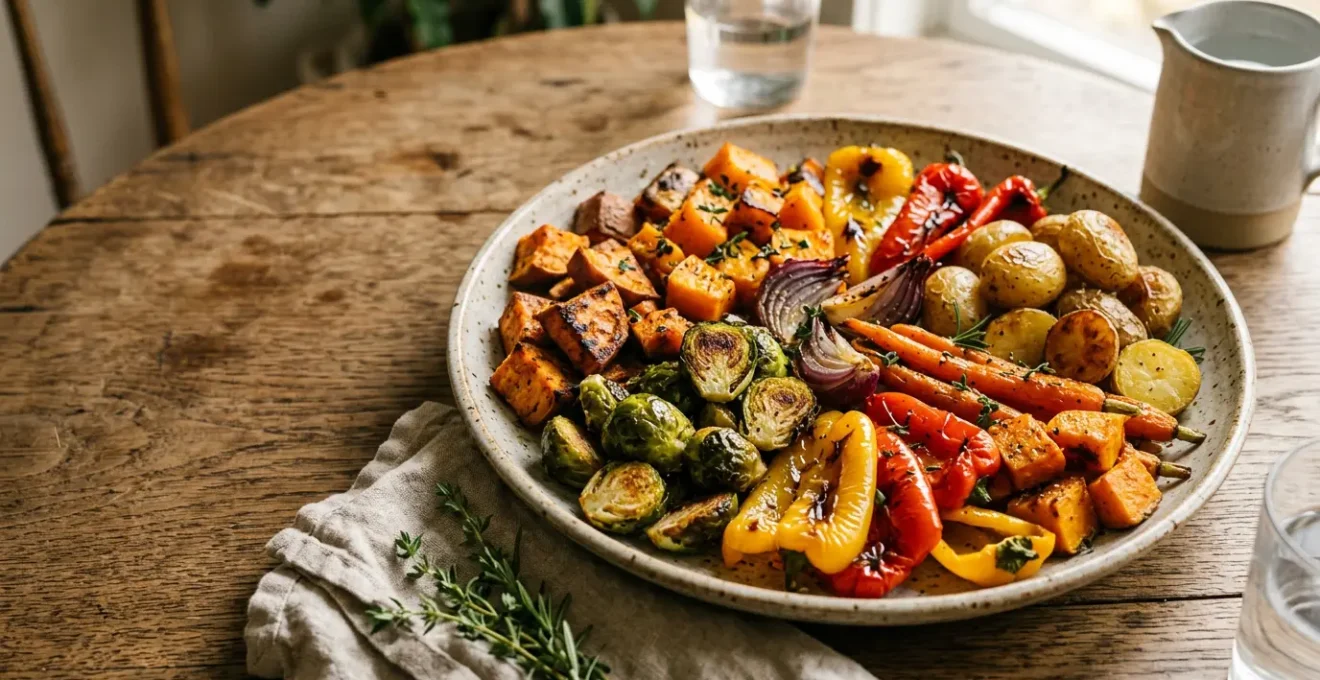
If boiling washes flavour away, then dry heat methods like roasting and charring are where you create it. This isn’t just an opinion; it’s chemistry. When you roast vegetables, you’re not just cooking them; you’re initiating a series of glorious chemical reactions that generate hundreds of new flavour and aroma compounds. The most famous of these is the Maillard reaction, a magical process that occurs between amino acids and reducing sugars when heated.
This reaction, which science shows kicks in optimally between 140 to 165 °C (280 to 330 °F), is responsible for the delicious browning on everything from toast to seared steak, and it works wonders on vegetables. It’s what gives roasted carrots their deep, nutty sweetness and turns a humble Brussels sprout into a complex, savoury morsel. This process concentrates the natural sugars, drives off excess water, and creates a beautifully crisp-edged, tender-centred texture that is infinitely more satisfying than its boiled counterpart.
To really amplify this effect, embrace charring. Taking vegetables just to the point of deep brown and even black-flecked edges on a griddle pan or under the grill adds a smoky, slightly bitter complexity that balances their sweetness. Think of charred tenderstem broccoli or blistered bell peppers. Another professional technique is spice blooming. Instead of just sprinkling spices on at the end, gently heat them in oil at the start of cooking. This awakens their fat-soluble compounds, infusing the entire dish with a profound depth of aroma and flavour that you simply can’t get from a dry sprinkle.

This close-up view reveals the stunning transformation. The golden-brown crust is a testament to the Maillard reaction, creating a textural and flavourful contrast to the soft interior. These techniques don’t just add flavour; they multiply it, transforming simple vegetables into the highlight of the meal, no heavy sauces required.
Fresh, Frozen, or Tinned Vegetables: Which Actually Delivers More Vitamins to Your Plate?
The assumption that the “fresh” produce aisle is always nutritionally superior is a persistent myth that can needlessly inflate your grocery bill. While a carrot pulled from your garden moments before cooking is a nutritional goldmine, the reality of the modern UK food supply chain is far more complex. “Fresh” vegetables in a supermarket may have travelled for days or even weeks, sitting in storage and on shelves, all while their nutrient content, especially delicate vitamins like C and folate, steadily declines.
This is where frozen vegetables become the unsung heroes of the nutrient-dense kitchen. Produce destined for the freezer is typically picked at its peak ripeness and “flash-frozen” within hours, a process that locks in vitamins and minerals at their highest point. Tinned vegetables are also a viable option, particularly for items like tomatoes and pulses, as the canning process can even make some nutrients, like the lycopene in tomatoes, more bioavailable. The key is to choose those tinned in water or their own juice, without added salt or sugar.
This isn’t just theory; it’s backed by scientific analysis. Numerous studies have put this myth to the test, often with surprising results that challenge our ingrained beliefs about the superiority of fresh produce that has been in transit for days.
Case Study: The University of Georgia’s Nutrient Analysis
A widely cited body of research, including studies from the University of Georgia and UC Davis, compared the nutrient levels of fresh and frozen produce. As highlighted in reviews of the science, they frequently found that the nutritional value was comparable across the board. In some instances, frozen varieties like peas and spinach had higher levels of certain vitamins, such as vitamin C and antioxidants, than their “fresh” counterparts that had been stored for five days—a typical timeframe from farm to fork. This research demonstrates that freezing is an incredibly effective method of preserving a vegetable’s nutritional integrity from the moment it’s harvested.
The takeaway for the savvy UK home cook is liberating. Your freezer aisle is a treasure trove of affordable, nutrient-packed ingredients. Embracing frozen peas, spinach, berries, and green beans means you get peak-season nutrition all year round, reduce food waste, and ease the pressure on your weekly budget without compromising your health goals.
The Hidden Additives in UK Health Foods That Sabotage Your Nutrient Goals
As we become more health-conscious, food manufacturers have responded with a dizzying array of products marketed as “healthy,” “low-fat,” or “high-protein.” Yet, a glance at the ingredients list often reveals a cocktail of additives designed to improve texture, extend shelf life, and, crucially, make low-fat or low-sugar foods palatable. Among the most pervasive are emulsifiers, thickeners, and stabilisers.
These additives are used to create a smooth, creamy texture in products like low-fat yogurts, salad dressings, and plant-based milks. While they are approved for consumption, a growing body of scientific evidence suggests they may not be as benign as once thought, particularly for our gut health. Research into the UK food supply reveals a landscape saturated with these compounds, with as many as 66 emulsifiers authorized in UK food products alone. Their purpose is often to replicate the satisfying mouthfeel of fat, a sensory trick that can come at a biological cost.
The concern lies in how these molecules interact with the delicate ecosystem of our gut. The gut microbiome is a complex community of bacteria that plays a vital role in everything from digestion to immune function. Some research indicates that certain synthetic emulsifiers can disrupt this balance. As leading researchers in the field have noted, the evidence from animal studies is a cause for concern:
In murine models, emulsifiers modify the luminal and mucosal microbiome and increase intestinal and chronic low-grade systemic inflammation.
– Cambridge Public Health Nutrition researchers, Emulsifiers in ultra-processed foods in the UK food supply
This suggests that while you may be choosing a “low-fat” option, you could be inadvertently consuming additives that promote low-grade inflammation, potentially undermining your long-term wellness goals. The simplest path is often the best: choose foods with the shortest ingredients lists, prioritising whole, unprocessed items wherever possible.
How to Plan a £50 Weekly Shop That Maximises Both Nutrition and Flavour?
Eating a nutritious, flavour-packed diet does not require an extravagant budget. With a strategic approach to your weekly shop, £50 can go an incredibly long way in a UK supermarket. The key is to shift your mindset from buying pre-made meals to purchasing versatile, high-impact components. It’s about prioritising whole foods and investing a small portion of your budget in a “flavour arsenal” that can elevate any simple ingredient.
The foundation of a budget-friendly, nutrient-dense shop lies in inexpensive staples: bags of carrots, onions, and potatoes; seasonal greens; tinned pulses like lentils and chickpeas; and whole grains like oats and brown rice. Frozen vegetables and fruits, as we’ve seen, offer incredible nutritional value for their price. The magic happens when you dedicate a small fraction of your budget—say, £5-£7—to items that deliver a disproportionate amount of flavour.
This isn’t about buying dozens of expensive spice jars. It’s about a curated selection of power players. A tube of tomato purée for umami depth, a bottle of good soy sauce, a block of strong cheese like parmesan (a little goes a long way), and a packet of smoked paprika can transform countless meals. Planning meals around what’s on offer, particularly seasonal produce from stores like Aldi and Lidl, is another cornerstone of this approach. Here is a practical framework to guide your shopping:
- Build a ‘Flavour Arsenal’: Allocate £5-£7 of your budget to high-impact flavourings. Think smoked paprika for smoky depth, quality soy sauce for umami, a block of parmesan for savoury richness, and a versatile cooking oil like olive or avocado oil.
- Shop Seasonally and Savvy: Check the weekly deals like Aldi’s ‘Super 6’ or Lidl’s ‘Pick of the Week’. Root vegetables, kale, and cabbage are fantastic value in winter, while courgettes, peppers, and berries are cheaper in summer.
- Master Unit Pricing: Ignore the sticker price and look at the price per 100g or per kg. This often reveals that larger bags of ‘wonky’ veg, own-brand frozen items, or dried pulses offer far better nutritional value for money.
- Cook Once, Flavour Thrice: This strategy maximises both your time and ingredients. Roast a large tray of mixed root vegetables. Night one, serve them as a side. Night two, blend half the leftovers with vegetable stock and spices for a creamy soup. Night three, use the remaining veg as a delicious base for a frittata with eggs and cheese.
Why Some Processed Foods Are Fine and Others Wreck Your Metabolism Over Time?
The term “processed food” has become a villain in the wellness world, but this blanket demonisation lacks nuance and can create unnecessary anxiety. In reality, processing exists on a vast spectrum. Nearly all food is processed to some degree—from pasteurised milk to a bag of frozen spinach. These forms of minimal processing are often beneficial, making food safer, preserving nutrients, and increasing convenience without harming our health.
The danger lies at the far end of the spectrum, with what are known as ultra-processed foods (UPFs). These are not just modified foods; they are industrial formulations made from substances extracted from foods or synthesised in labs. UPFs are engineered for hyper-palatability—a bliss point of salt, sugar, and fat that bypasses our natural satiety signals, encouraging overconsumption. They are also packed with cosmetic additives like emulsifiers, thickeners, and artificial flavours to make them texturally appealing and shelf-stable for months or years.
The metabolic impact of these two categories is worlds apart. Minimally processed foods like plain yogurt or tinned beans are digested slowly, providing a steady release of energy and nutrients. In contrast, UPFs often cause rapid blood sugar spikes and crashes, contributing to a cycle of cravings and energy slumps. The additives they contain can also, as discussed, negatively impact gut health. Understanding this distinction is crucial for navigating the modern food environment without fear. The goal isn’t to avoid all processed food, but to consciously limit the ultra-processed kind.
A recent analysis of food additives provides a clear framework for distinguishing between processing for preservation and processing for hyper-palatability, as this comparative analysis from public health researchers shows.
| Processing Type | Purpose | Examples | Metabolic Impact |
|---|---|---|---|
| Minimal Processing (Preservation) | Preserve nutrients, extend shelf-life | Frozen vegetables, tinned fish (in water), pasteurized milk, plain yogurt | Neutral to positive; nutrients retained, minimal additives |
| Moderate Processing | Convenience with some formulation | Whole grain bread, tinned beans (low sodium), nut butters | Generally neutral if low in added sugar/sodium |
| Ultra-Processing (Hyper-palatability) | Engineer for overconsumption, extended shelf-life | Sugary cereals, crisps, ready meals with high sodium/sugar, processed meats with multiple additives | Negative; bypasses satiety signals, rapid blood sugar spikes, gut inflammation from emulsifiers |
How to Feed 30 Different Plant Foods to Your Gut Bacteria Every Week?
One of the most powerful things you can do for your long-term health is to cultivate a diverse gut microbiome. A thriving internal ecosystem is linked to better immunity, mood, and metabolic health. Leading gut health experts, like those at ZOE, suggest that the key to this is not eating vast quantities of one “superfood,” but rather eating a wide variety of different plants. The target they recommend is ambitious but achievable: 30 different plant points per week.
This might sound daunting, but the “Plant Point System” is a game of diversity, not volume. You don’t need to eat 30 full portions; a sprinkle or a spoonful is enough to count. Every different type of fruit, vegetable, whole grain, legume, nut, seed, herb, and spice counts as one point. This reframes healthy eating as a fun and flavourful challenge. A simple salad can suddenly become a 5-point powerhouse: lettuce (1), cucumber (1), tomato (1), a sprinkle of sunflower seeds (1), and a dressing with fresh parsley (1).
The secret is to “micro-dose” diversity throughout your day. It’s about the small additions that add up. Using a different herb each day, rotating the types of nuts and seeds you sprinkle on your morning oats, or throwing a handful of mixed beans into a chilli are all simple strategies to effortlessly boost your count. This approach not only feeds your gut bacteria but also dramatically increases the flavour and textural complexity of your meals, making healthy eating a constant journey of discovery.
Your Weekly Plant Point Action Plan
- Aromatic Herbs (1 point each): Make it a habit to finish dishes with fresh herbs. A tablespoon of chopped basil, coriander, parsley, mint, or thyme adds a point and a burst of freshness.
- Crunchy Nuts & Seeds (1 point each): Keep a jar of mixed seeds (pumpkin, sunflower, sesame, chia, flax) on your counter. Sprinkle a different one over your breakfast, salads, or soups each day. Each new variety is a new point.
- Hearty Legumes (1 point each): Don’t just stick to one type of bean. Rotate between lentils, chickpeas, black beans, kidney beans, and cannellini beans in your stews, curries, and salads throughout the week.
- Flavour-Forward Plant Pantry (1 point each): Utilise flavour boosters that are also plants. Olives, capers, sun-dried tomatoes, and different varieties of alliums (red onion, white onion, shallots, spring onion, garlic) all count towards your total.
- Micro-Dosing Diversity: Think in additions. A tablespoon of kimchi (fermented cabbage + spices = 3+ points) on the side of a meal, a sprinkle of mixed seeds on your avocado toast (2-3 points), or a different fresh herb each day makes hitting 30 points almost effortless.
Key Takeaways
- Flavour is not the enemy of health; it’s the result of good cooking science. Ditching boiling for roasting and charring is the single biggest upgrade you can make.
- The freezer aisle is your ally. Frozen vegetables are picked at peak ripeness, locking in nutrients that “fresh” produce can lose during transport and storage.
- Focus on reducing ultra-processed foods (UPFs) with long, chemical-filled ingredient lists, not all processed foods. Tinned beans and plain yogurt are your friends.
How to Shift to Whole Foods When Your Entire Kitchen Relies on Ready Meals?
For someone whose kitchen is built around the convenience of ready meals, the advice to “just cook from scratch” can feel like being asked to climb a mountain without any gear. The jump is too big, the effort seems too great, and the results often feel less satisfying than the hyper-palatable meal you’re trying to replace. The key to a successful transition is not a radical overhaul but a gradual, strategic process of “Component Upgrading” and palate resetting.
The first step is to acknowledge a crucial biological fact: your taste buds have been trained by the food industry to expect intense levels of salt, sugar, and fat. Whole foods will initially taste bland in comparison. This is normal. A two-week palate reset, where you consciously and gradually reduce your intake of ultra-processed items, allows your taste receptors to re-sensitize to the subtle, complex, and ultimately more rewarding flavours of real food. You don’t have to go cold turkey. Start by swapping one ready meal a week for a “component-based” meal.
This “Component Upgrade” strategy is the bridge between convenience and from-scratch cooking. It’s not about complex recipes; it’s about assembling better parts. Instead of a ready-made lasagne, use a good quality jarred tomato sauce but serve it with whole-wheat pasta and wilt a bag of fresh spinach into the sauce at the last minute. This is assembly, not cheffing, but it puts you back in control. The goal is to build confidence with simple, flavourful formulas that are almost as fast as a microwave.
- Start with the Component Upgrade: For the first two weeks, don’t try to make everything from scratch. Keep your favourite jarred pasta sauce or curry paste, but upgrade the components around it. Serve it with brown rice or whole-wheat pasta, and always add a vegetable—wilt in spinach, stir in frozen peas, or serve with a side of roasted broccoli.
- Embrace the “1 Protein + 1 Veg + 1 Flavour” Formula: This is the ultimate fast-food alternative. Combine a pre-cooked protein (like a rotisserie chicken breast or tinned salmon), a bag of microwavable steam-in-bag vegetables, and a “flavour bomb” like a drizzle of pesto, a spoonful of hummus, or a splash of quality balsamic glaze and olive oil. It’s a balanced, delicious meal in under 5 minutes.
- Commit to a 2-Week Palate Reset: Acknowledge that whole foods will taste different at first. By consciously reducing your intake of hyper-palatable foods for just 14 days, you allow your taste buds to become more sensitive to natural flavours, making simple, healthy food taste delicious again.
- Stock 5-Minute Flavour Bombs: Always have a few key ingredients on hand that can instantly elevate any simple whole food. Crumbled feta cheese, toasted seeds, fresh lemon juice, a good olive oil, and hot sauce can make a plain piece of chicken or a bowl of steamed vegetables exciting and satisfying.
Begin this week by choosing one ready meal to replace with a “Component Upgrade” meal. This single, manageable step is the beginning of taking back control of your plate and rediscovering the profound pleasure of real food.