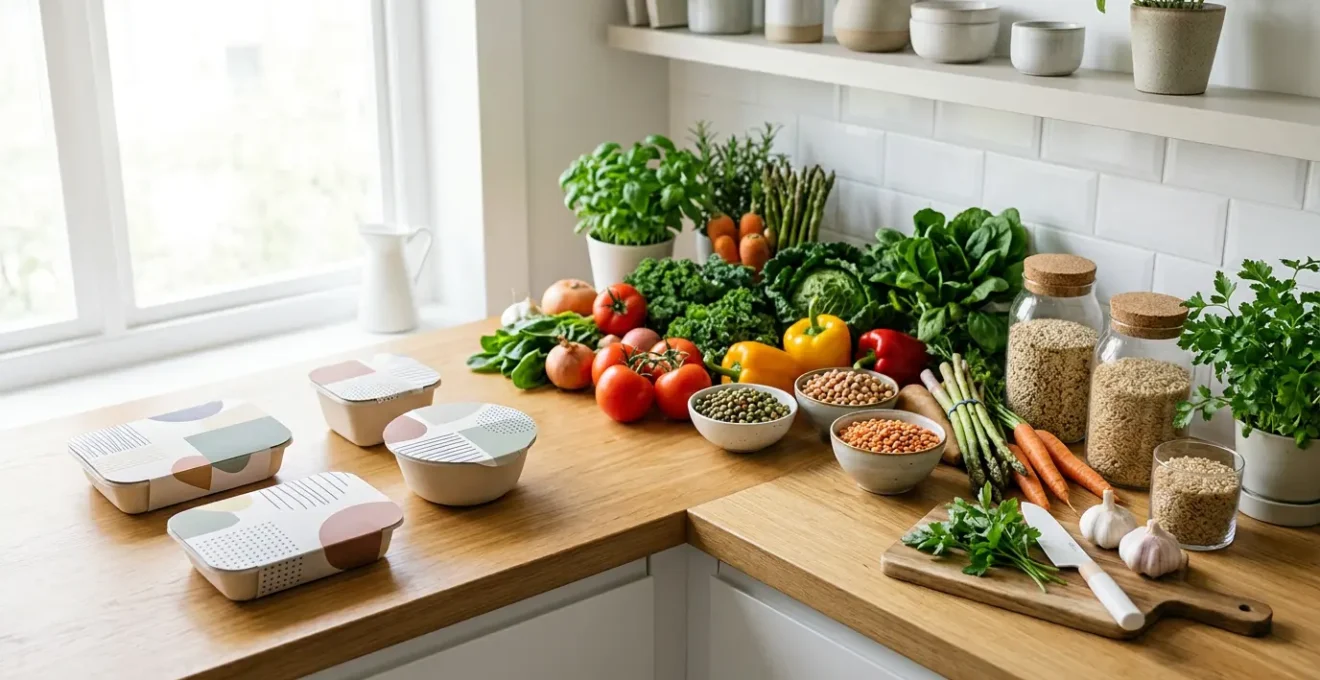
In summary:
- Start with ‘Upgrades’, not ‘Elimination’: Enhance one meal a week with a whole food component instead of attempting a total, wasteful overhaul.
- Focus on ‘Component Prep’: Cook versatile basics like grains and roasted vegetables, not entire meals, to make daily assembly fast and prevent flavour fatigue.
- Master Flavour Anchors: Learn to use herbs, spices, and healthy fats to make nutrient-dense food genuinely delicious and satisfying for the whole family.
That moment is familiar to so many of us. It’s 6 PM, the day has been relentless, and the thought of chopping, boiling, and baking from scratch feels like an insurmountable mountain. The ready meal, with its promise of a hot dinner in minutes, feels less like a choice and more like a survival tool. You know you ‘should’ be eating better, but the advice you see online—”throw out everything in your pantry,” “spend five hours batch cooking every Sunday”—feels like it was written for someone with a different life, a different budget, and certainly more time.
This all-or-nothing approach is precisely why so many well-intentioned efforts to eat healthier fail. It creates waste, fuels overwhelm, and often leads to rebellion from family members accustomed to their favourite convenience foods. But what if the secret to a successful transition wasn’t a radical kitchen revolution, but a quiet, clever evolution? What if you could shift your family’s diet towards nutritious, whole foods without the drama, the waste, or the feeling that you need to become a professional chef overnight?
This is not about perfection; it’s about progress. It’s about making a series of small, strategic ‘upgrades’ to your existing habits. This guide provides a non-judgmental, step-by-step roadmap to do just that. We’ll explore how to identify the real troublemakers in your cupboards, how to build delicious meals that don’t taste ‘blandly healthy’, and most importantly, how to bring your family along on the journey, turning potential food-wars into a shared adventure.
This article will guide you through a practical and sustainable process for transforming your kitchen from a hub of convenience to a source of genuine nourishment. Below is a summary of the key steps we will cover to make this transition feel achievable and even enjoyable.
Summary: Your Practical Roadmap to a Whole Food Kitchen
- Why Some Processed Foods Are Fine and Others Wreck Your Metabolism Over Time?
- How to Gradually Replace Your Cupboard Staples Without Wasting £200 of Current Stock?
- Weekend Batch Cooking or Daily Fresh Prep: Which Keeps Whole Foods Practical?
- The Flavour Fatigue Mistake That Sends 60% of Whole Food Converts Back to Takeaways
- When to Introduce Whole Foods to Reluctant Family Members Without Starting Wars?
- How to Build a Balanced Plate Using the NHS Eatwell Principles Without Any Measuring?
- Which Eating Pattern Reverses Insulin Resistance Fastest: Low Carb, Mediterranean, or Fasting?
- Why Healthy Eating Feels Bland and How to Make Nutrient-Dense Food Actually Delicious?
Why Some Processed Foods Are Fine and Others Wreck Your Metabolism Over Time?
The term “processed food” often conjures images of neon-coloured snacks and microwave dinners, but the reality is more nuanced. Processing itself isn’t inherently evil; it’s a spectrum. Tinned tomatoes, frozen peas, and pre-cooked lentils are all technically processed, yet they are fantastic, convenient building blocks for a healthy diet. The real issue lies with ultra-processed foods (UPFs). These are industrial formulations made mostly from substances extracted from foods (like fats, starches, and sugars) and additives designed to make them intensely palatable and long-lasting.
The distinction is critical. While a bag of frozen spinach is simply spinach, a frozen pizza is a complex product engineered in a lab. These UPFs now dominate many Western diets. Research from Stanford Medicine highlights that they account for nearly 60% of U.S. adults’ calorie consumption and an even higher percentage for children. This widespread consumption is a serious concern because these foods are designed to override our natural satiety signals, encouraging us to overeat while providing minimal nutritional value.
The long-term metabolic consequences are significant. UPFs are linked to chronic inflammation, insulin resistance, and weight gain. They disrupt the delicate balance of our gut microbiome and can set the stage for chronic diseases. In fact, a major 2024 review found that high consumption of UPFs is directly associated with a 50% increased risk of cardiovascular disease-related death and a 48% higher risk of anxiety. The first step in your transition is not to ban all processed items, but to learn to identify and gradually reduce these specific, metabolically-damaging ultra-processed products.
How to Gradually Replace Your Cupboard Staples Without Wasting £200 of Current Stock?
The idea of a dramatic “pantry purge” is both wasteful and financially daunting. A far more sustainable approach is the “use one, upgrade one” method. As you finish a jar of pasta sauce, a box of cereal, or a packet of instant noodles, you consciously replace it with a better-quality, less processed alternative. This gradual upgrade strategy prevents you from throwing away perfectly good food and allows your budget to adapt over time. You don’t need to find £200 overnight; you just need to make a different choice on your next weekly shop.
The goal is to slowly build an “emergency shelf” of whole food staples that can be combined to create a quick, nutritious meal when you’re short on time. This isn’t about having a perfectly curated pantry from day one; it’s about having a reliable fallback that is healthier than a takeaway. Start by stocking up on a few versatile items that form the foundation of many simple meals. Over a few months, your cupboards will naturally transform without a single, dramatic clear-out.
Your new “go-to” shelf should include a mix of grains, proteins, and healthy fats that are quick to prepare. Consider these essentials for your next shopping list:
- Brown rice, quinoa, dried beans, and lentils for quick-cooking whole grains and proteins
- Nuts, seeds, and natural nut butters for healthy fats and satiety
- Canned tomatoes and canned legumes with no added sugar or salt
- Fresh vegetables and fruits, prioritising seasonal produce for affordability
- Eggs, plain yogurt, and unsweetened plant-based milk for protein variety
- Frozen berries and vegetables for convenience and preserved nutrients
Action Plan: Your Pantry Upgrade Audit
- Take Inventory: List the ready meals and UPF staples you rely on most. No judgment, just data.
- Identify Quick Wins: Which of these items could be most easily “upgraded”? (e.g., swapping a sugary breakfast cereal for porridge oats).
- Plan ‘Bridge Meals’: For the next two weeks, plan how to use up one existing item by pairing it with a new, healthier component (e.g., use your current jarred sauce but serve it with wholewheat pasta and fresh veg).
- Build a Smart Shopping List: Based on the essentials list above, add 2-3 “upgrade” items to your next grocery shop.
- Designate an ‘Emergency Shelf’: Clear one shelf in your cupboard. As you buy your new whole food staples, this becomes your new go-to spot for quick meal assembly.
Weekend Batch Cooking or Daily Fresh Prep: Which Keeps Whole Foods Practical?
The internet is full of images of identical meals perfectly portioned into a week’s worth of plastic containers. For some, this five-hour Sunday “batch cook” is a lifeline. For most busy families, however, it’s a rigid, time-consuming chore that leads to eating the same monotonous meal for days on end. Daily fresh prep, on the other hand, sounds ideal but is often unrealistic on a hectic Tuesday evening. The most practical and sustainable solution lies in the middle: Component Prep.
Instead of cooking five identical chicken and broccoli dinners, you prepare versatile components that can be mixed and matched throughout the week. This approach offers the efficiency of batch cooking with the flexibility of daily prep. A Sunday hour could be spent cooking a large batch of quinoa, roasting a big tray of mixed vegetables (peppers, onions, courgettes), and making a simple vinaigrette. These are not complete meals; they are building blocks.
With these components ready in the fridge, a healthy dinner can be assembled in minutes. The pre-cooked quinoa and roasted veg can be turned into a warm salad with some feta and chickpeas one night, a filling for wraps the next, or a base for a quick stir-fry with some added protein on another. This method is the key to avoiding flavour fatigue and adapting to the different preferences within a family.
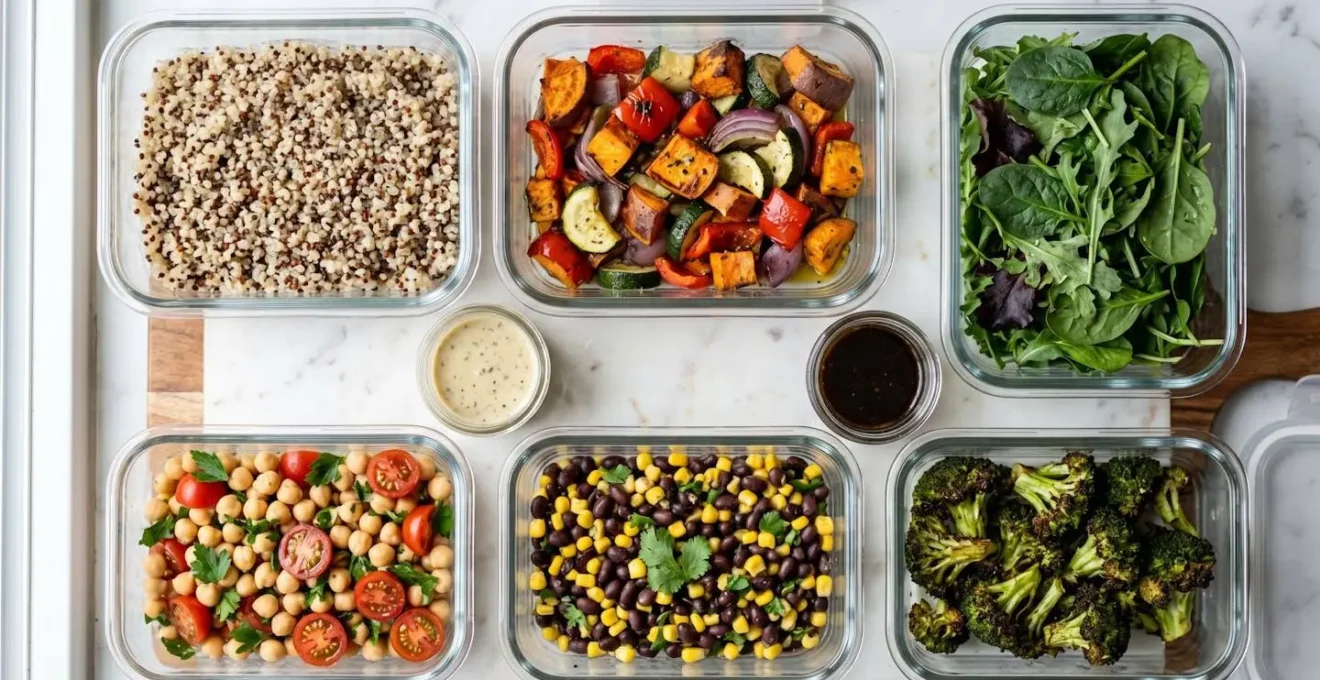
As you can see, having these individual elements ready transforms daily cooking from a chore into a simple assembly job. It empowers you to create varied, interesting meals in less time than it takes for a takeaway to be delivered. This is the true secret to making whole foods practical for a busy lifestyle.
The Flavour Fatigue Mistake That Sends 60% of Whole Food Converts Back to Takeaways
One of the biggest hurdles when shifting away from ready meals is “flavour fatigue.” Our palates become conditioned to the intense, scientifically-engineered combination of salt, sugar, and fat found in ultra-processed foods. When we switch to simple steamed vegetables and plain grilled chicken, our brain interprets it as bland and unsatisfying, triggering powerful cravings for the intense flavours it’s used to. This isn’t a lack of willpower; it’s a biological response.
The mistake is assuming that “healthy” must equal “bland.” The solution is to become a master of Flavour Anchors—simple, healthy additions that pack a powerful taste punch. This involves learning to use herbs, spices, citrus, and healthy fats to create deliciousness from scratch. Think of a simple vinaigrette made with good olive oil, Dijon mustard, and lemon juice; roasted garlic that turns sweet and creamy; or a sprinkle of smoked paprika that adds depth to any dish. These are the tools that make nutrient-dense food genuinely crave-able.
Interestingly, whole foods can be more satisfying if prepared correctly. A fascinating study from the University of Bristol highlighted that people on unprocessed diets often eat more food by weight but consume fewer calories overall. Their research showed that participants on an unprocessed diet ate 57% more food by weight yet consumed 330 fewer calories daily than those on a processed diet. The key to this is satiety, which is driven not just by volume but also by nutrients and flavour. By making your whole food meals delicious, you ensure you are both physically and psychologically satisfied, which is critical for long-term adherence.
When to Introduce Whole Foods to Reluctant Family Members Without Starting Wars?
Introducing significant dietary changes to a family, especially one with children or partners accustomed to certain foods, requires strategy and empathy. A sudden, top-down declaration that “we’re only eating healthy food now” is a recipe for conflict. The key is gradual introduction, inclusion, and communication, turning the change into a shared project rather than a restriction imposed upon them.
Start by having an open, non-judgmental conversation. Explain the ‘why’ in simple terms—not about “being fat” or “unhealthy,” but about having more energy to play, feeling stronger, and discovering new tastes together. Frame it as an adventure. Then, introduce changes slowly using ‘Bridge Meals’. This could mean making your own spaghetti bolognese sauce but serving it with the family’s favourite brand of pasta, or making homemade chicken nuggets that are baked instead of fried. The meal is still familiar, but it contains a healthy ‘upgrade’.
Involvement is your most powerful tool. Take children to the supermarket and empower them to choose a new vegetable to try that week. Let them help wash the salad or stir the sauce. When people, especially children, have a hand in preparing a meal, they are far more likely to eat it. Avoid making mealtimes a battleground. If a child refuses a new food, don’t force it. Simply ensure there’s at least one healthy component on their plate that you know they will eat, and keep re-introducing the new food without pressure in the future. Patience and positivity are more effective than any dinner-table demand.
How to Build a Balanced Plate Using the NHS Eatwell Principles Without Any Measuring?
One of the most intimidating aspects of ‘healthy eating’ is the perceived need for constant measuring, weighing, and calorie counting. This clinical approach can suck the joy out of food. Thankfully, the principles of a balanced meal, as outlined by the NHS Eatwell Guide, can be applied visually using a simple technique we can call Plate Mapping. You don’t need scales or measuring cups; you just need your eyes and a dinner plate.
The principle is straightforward and highly effective for creating balanced, satisfying meals. Imagine your plate is divided into three sections:
- Half Your Plate (50%): This section should be filled with vegetables and/or salad. Aim for a variety of colours to maximise your intake of different vitamins and minerals. This could be a large side salad, a generous portion of steamed green beans, or a colourful mix of roasted peppers and courgettes.
- One Quarter of Your Plate (25%): This is for your lean protein source. This includes foods like chicken, fish, eggs, beans, lentils, or tofu. A portion is typically about the size of the palm of your hand.
- One Quarter of Your Plate (25%): This final section is for starchy, higher-fibre carbohydrates. This means choosing wholegrains like brown rice, quinoa, wholewheat pasta, or a baked potato with the skin on, rather than white, refined versions.
This simple visual guide ensures you get a nutrient-dense, high-volume meal that is rich in fibre and protein, which are key for feeling full and satisfied. It automatically controls portion sizes without the need for obsessive tracking.
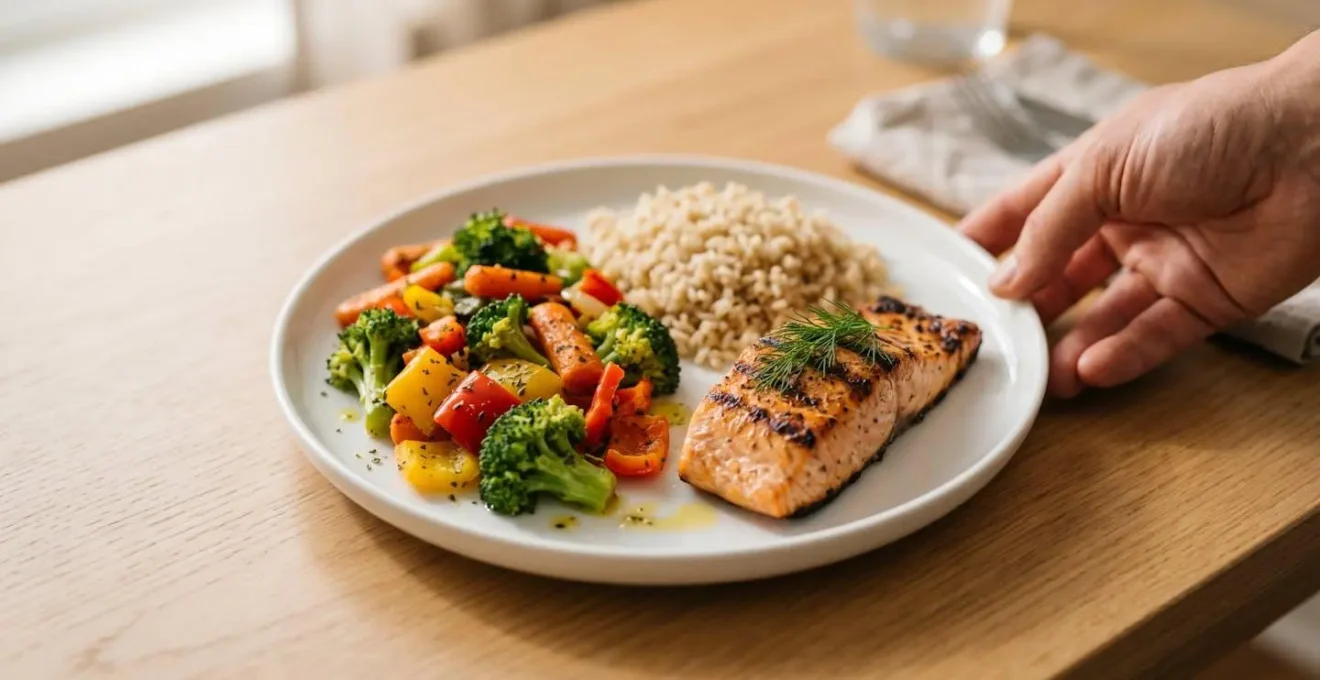
The plate shown here is a perfect example of Plate Mapping in action. The colourful vegetables take up half the space, while the grilled salmon and brown rice each occupy a quarter. It’s a simple, stress-free method for building a healthy meal every single time.
Which Eating Pattern Reverses Insulin Resistance Fastest: Low Carb, Mediterranean, or Fasting?
When looking to improve metabolic health and reverse issues like insulin resistance, several popular eating patterns emerge as contenders. Low-carbohydrate diets, intermittent fasting, and the Mediterranean diet all have proponents and have shown success in clinical settings. However, for a family transitioning away from convenience foods, the most sustainable, enjoyable, and scientifically-backed pattern is overwhelmingly the Mediterranean diet.
Low-carb diets can be highly effective for blood sugar control but are often difficult to maintain long-term and can be challenging to implement for a whole family, especially with children who have high energy needs. Intermittent fasting focuses on *when* you eat rather than *what* you eat, and while it has metabolic benefits, it doesn’t inherently teach healthy food choices and can be socially disruptive. The Mediterranean diet, however, is not a restrictive ‘diet’ but a joyful pattern of eating based on delicious, whole foods.
It naturally aligns with all the principles we’ve discussed: an abundance of vegetables, fruits, nuts, seeds, and legumes; a focus on healthy fats like olive oil; and the inclusion of fish and whole grains. It is not about elimination but about abundance. This approach has been rigorously studied for decades, and the evidence is clear. A wealth of research, including both large population studies and randomized clinical trials, has shown that it consistently reduces the risk of heart disease, metabolic syndrome, diabetes, and certain cancers. It is the gold standard for a pattern of eating that promotes both longevity and enjoyment, making it the ideal target for a family’s whole food journey.
Key Takeaways
- The goal is progress, not perfection. A ‘bridge meal’ that is part-homemade, part-convenience is a victory over a fully processed takeaway.
- Component prep trumps batch cooking for flexibility. Preparing versatile ingredients (grains, roasted veg) prevents flavour fatigue and makes daily meal assembly fast.
- Flavour is non-negotiable for long-term success. Master simple ‘Flavour Anchors’ like herbs, spices, and healthy fats to make food you genuinely crave.
Why Healthy Eating Feels Bland and How to Make Nutrient-Dense Food Actually Delicious?
Had participants eaten only the calorie-rich foods, our findings showed they would have fallen short on several essential vitamins and minerals and eventually developed micronutrient insufficiencies.
– Mark Schatzker, The End of Craving author, commenting on University of Bristol whole foods research
This quote gets to the heart of the modern food dilemma: the foods we are often conditioned to crave are high in calories but poor in essential nutrients. The reason “healthy” food can feel bland is that our palates have been trained by the food industry to expect a symphony of intense salt, sugar, and fat in every bite. The natural, more subtle flavours of real food can seem muted in comparison. The challenge isn’t that whole food is boring; it’s that our taste buds need to be retrained to appreciate its natural deliciousness.
The secret to making nutrient-dense food taste amazing is twofold. First, it’s about technique. Learning how to properly roast vegetables until they caramelise and turn sweet, how to sear a piece of fish to get a crispy skin, or how to build a rich, flavourful soup base from scratch are fundamental skills. These techniques don’t require professional training, just a bit of practice. They elevate simple ingredients into something truly special.
Second, it’s about mastering those Flavour Anchors we mentioned earlier. A squeeze of lime, a handful of fresh coriander, a dash of high-quality soy sauce, or a dollop of Greek yogurt can completely transform a dish. Building a small arsenal of these flavour-boosters is the fastest way to ensure your healthy meals are never boring. By focusing on adding flavour rather than restricting foods, you reframe the entire experience from one of deprivation to one of culinary discovery. You’re not just making ‘healthy food’; you’re learning to cook food that is vibrant, satisfying, and genuinely delicious.
Your journey begins not with a complete overhaul, but with one small, achievable step. The goal is to build confidence and momentum. Start today by choosing one ‘bridge meal’ to prepare this week, and take a moment to celebrate that small but significant victory.