
The key to raising a healthy child isn’t stricter rules, but strategically redesigning your family’s environment to make healthy choices the easiest option.
- Modern life’s default settings encourage sedentary behaviour and poor nutrition; fighting this with willpower alone is a losing battle.
- Shifting focus from portion control and screen time limits to food quality, mindful movement, and a parent’s own emotional state creates sustainable change.
Recommendation: Start by changing one environmental cue—like placing a fruit bowl by the door or walking shoes in the hall—instead of enforcing a new rule.
As a parent in the UK today, it can feel like you’re swimming against a powerful tide. You’re bombarded with conflicting advice while surrounded by commercial pressures pushing cheap, sugary foods and screen-based entertainment. The classic refrains of « eat your vegetables » and « go play outside » feel hopelessly outdated when competing with hyper-palatable snacks and addictive algorithms. You strive to do what’s best, but the daily arguments over broccoli and iPads are exhausting, leaving you wondering if you’re fighting a battle you simply can’t win.
The common advice often focuses on parental control: stricter limits, more rules, constant vigilance. But what if this approach is flawed? What if the constant struggle isn’t a sign of your failure, but proof that the strategy itself is wrong? The truth is, our children’s health is less about our moment-to-moment instructions and more about the environment we curate and the unconscious emotional currents within the family. It’s not about policing behaviour, but about changing the system.
This guide offers a different perspective, grounded in a whole-family, evidence-based approach. We will move beyond the daily wars and explore how to subtly re-engineer your family’s world. We’ll look at creating an environment where activity is natural, nutritious food is appealing, and emotional well-being is the foundation for physical health. It’s about parenting smarter, not harder, by understanding the hidden forces that shape your child’s choices—and your own.
This article provides a roadmap to navigate the complexities of modern parenting. Below, you will find a breakdown of key strategies, from age-specific nutritional needs to the profound connection between movement and emotional regulation, all designed to empower you with practical, sustainable solutions.
Summary: A Parent’s Compass for Navigating Modern Childhood Health
- What Should Your Child Actually Be Eating at 2, 5, and 10 Years Old?
- How to Make Your Child Naturally Active When Everything Encourages Them to Sit Still?
- How Much Screen Time Is Actually Harmful and How to Enforce Limits Without Daily Wars?
- How to Help an Overweight Child Without Causing Eating Disorders or Low Self-Esteem?
- How to Create Family Health Habits When Adults and Children Need Different Approaches?
- How to Feed 30 Different Plant Foods to Your Gut Bacteria Every Week?
- Why Children Who Move More Are Often Better at Managing Big Emotions?
- Why Your Unconscious Reactions Parent Your Children More Than Your Intentions?
What Should Your Child Actually Be Eating at 2, 5, and 10 Years Old?
Navigating a child’s nutritional needs can feel like trying to hit a moving target. What works for a toddler is insufficient for a pre-teen, and the advice online is often contradictory. The core principle is to shift focus from controlling every mouthful to providing a consistent supply of nutrient-dense whole foods. A toddler’s energy needs, for example, can be met with around 1000-1400 kcal/day, but the quality of those calories is what builds the foundation for future health.
Instead of rigid meal plans, think in terms of developmental stages and building blocks. For a two-year-old, the goal is exposure and building food literacy—introducing a variety of textures and colours. By age five, you can start explaining how different foods provide « growing energy » or « thinking power. » By ten, they can begin to understand the role of macronutrients in fuelling sports and study. The constant through all these stages is the need for adequate calcium for bone development, a non-negotiable for a growing body.
The table below, based on established clinical guidelines, offers a practical framework for what to aim for at different ages. Use it not as a strict rulebook, but as a compass to guide your family’s food choices, remembering that consistency and variety always trump short-term perfection.
| Age Group | Key Nutritional Targets | Parenting Focus |
|---|---|---|
| 2-4 Years | 1-1.5 cups fruit; 2 cups milk equivalent | Introduce variety; build food literacy through simple explanations. |
| 5-8 Years | 1-2 cups fruit; 2-3 oz. protein | Emphasise nutrient-dense foods for energy and growth. |
| 9-13 Years | 1.5-2 cups fruit; 4-6 oz. protein; 3 cups milk equivalent | Explain macronutrients’ role in physical and cognitive performance. |
Ultimately, your role is to be the architect of the food environment. If colourful fruits and vegetables are washed, chopped, and visible, they are far more likely to be eaten than if they are hidden in a refrigerator drawer. This environmental design is far more effective than any mealtime negotiation.
How to Make Your Child Naturally Active When Everything Encourages Them to Sit Still?
The modern world is a masterpiece of convenience engineering, designed to minimise physical effort. This convenience comes at a cost to our children’s health. While health guidelines recommend 60 minutes of daily activity, the 2024 US Report Card on Physical Activity reveals that only 20-28% of children and teens are meeting this target. This isn’t due to laziness; it’s a direct result of an environment that promotes stillness. The solution isn’t just to schedule more sports; it’s to fundamentally redesign your family’s living space and daily rhythm to make movement the default.
This concept, known as environmental design, shifts the responsibility from the child’s willpower to the parent’s thoughtful planning. As one expert puts it, we must actively re-engineer our surroundings to build activity back into our lives. This sentiment is powerfully captured by a leading researcher in the field.
Human bodies were designed to move and be active, but modern society has made life more sedentary. We need to re-engineer our environments and routines to build activity back in.
– Jordan Carlson, Ph.D., Professor of Pediatrics at Children’s Mercy Kansas City, 2024 United States Report Card on Physical Activity for Children and Youth
Instead of a home centred around a screen, imagine one designed for movement. This doesn’t require a personal gym. It can be as simple as replacing a coffee table with soft floor cushions, installing a low balance beam, or adding a few climbing holds to a wall. These subtle changes send a powerful, constant invitation to climb, balance, and play, integrating physical activity seamlessly into daily life.
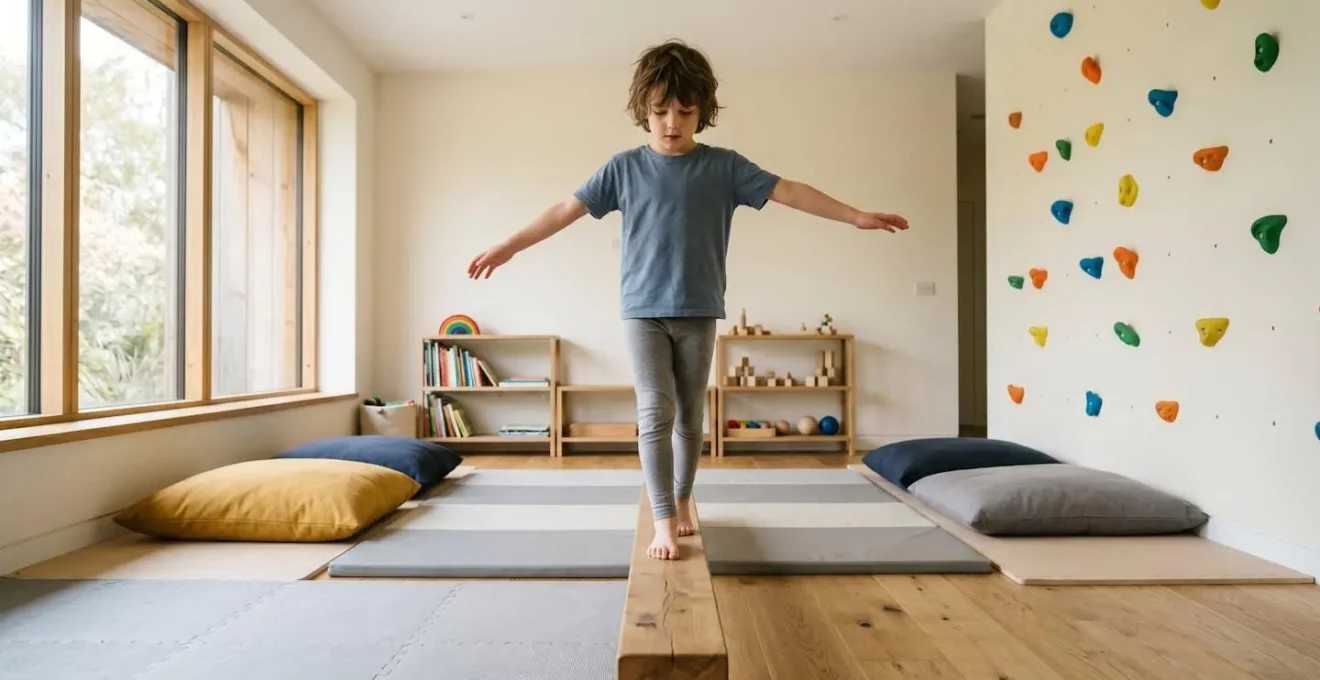
As this image demonstrates, an active home environment prioritises open space and opportunities for unstructured play. The focus shifts from « exercise time » to a continuous flow of natural movement. By curating the environment, you’re not just telling your child to be active; you’re making activity an irresistible and inherent part of being at home. This approach reduces conflict and fosters a genuine, lifelong love of movement.
How Much Screen Time Is Actually Harmful and How to Enforce Limits Without Daily Wars?
The battle over screen time is a defining feature of modern parenting. The statistics are stark: research cited by the American Association of Pediatrics found that children aged 8-12 now spend an average of 5.5 hours daily on screens, with that number soaring to over 8.5 hours for teens. Faced with these numbers, it’s easy to feel that the only solution is a blanket ban, but this often leads to more conflict and can ignore the social and educational value some media provides. A more effective strategy is to shift the conversation from quantity to quality.
Instead of focusing solely on a timer, the key is to become a « media mentor » for your child. This involves evaluating *what* they are doing on their screens. Is it passive consumption of low-quality content, or is it a creative, connective, or educational activity? Is it crowding out essentials like sleep, outdoor play, and family connection? Most importantly, are you having open conversations about it? Co-creating a family media plan with your child gives them a sense of ownership and dramatically increases their buy-in, reducing the daily power struggles.
To help guide this evaluation, you can use a simple framework. The following checklist helps you move beyond just counting hours and start assessing the role of media in your child’s life in a more nuanced and constructive way. It provides a structured method for making informed decisions as a family.
Action Plan: The 5 C’s Framework for Media Use
- Child: Consider who your child is, their developmental stage, and how they personally react to different types of media. What motivates their screen use—boredom, social connection, or genuine interest?
- Content: Evaluate the quality of the content. Is it passive consumption (e.g., watching unboxing videos) or active engagement (e.g., learning to code, creating art, video-chatting with grandparents)?
- Calm: Assess how screen time affects calm, especially around bedtime. Enforce a « no screens » rule for at least 30-60 minutes before sleep to allow melatonin levels to normalise.
- Crowding Out: Determine what essential activities media might be displacing. Is your child still getting enough sleep, physical play, family time, and time for homework and creative pursuits?
- Communication: Establish open and ongoing family conversations about screen time. Co-create your family’s media rules with age-appropriate involvement from your child to build their understanding and cooperation.
By using this framework, screen time transforms from a source of conflict into an opportunity for connection and teaching critical thinking skills. It empowers you to guide your child through the digital world with confidence, rather than just trying to lock the door to it.
How to Help an Overweight Child Without Causing Eating Disorders or Low Self-Esteem?
Discovering that your child is in a higher weight percentile can trigger significant parental anxiety. The scale of the issue is global; according to the latest WHO data, over 390 million children and adolescents were overweight in 2022. The instinct may be to intervene with diets and weigh-ins, but this approach is fraught with risk, often leading to shame, secrecy, and a damaged relationship with food and their own body. The most supportive and effective strategy is to banish talk of weight altogether and focus instead on health gain.
This means you never mention weight, size, or the need to « slim down. » Instead, you shift the entire family’s focus towards behaviours that enhance well-being for everyone, regardless of their body size. The goal becomes celebrating what our bodies can *do*, not what they look like. This might mean focusing on building stamina to bike to the park together, strength to carry the shopping in from the car, or flexibility to master a new yoga pose. You praise effort, consistency, and the feeling of getting stronger.
This approach de-links food and exercise from body size and re-links them to joy, strength, and capability. Non-scale victories become the primary measure of success: finishing a 5K fun run as a family, mastering a climbing wall, or simply noticing more energy during the day. This builds a child’s self-esteem on a foundation of their achievements and internal feelings, rather than a number on a scale.
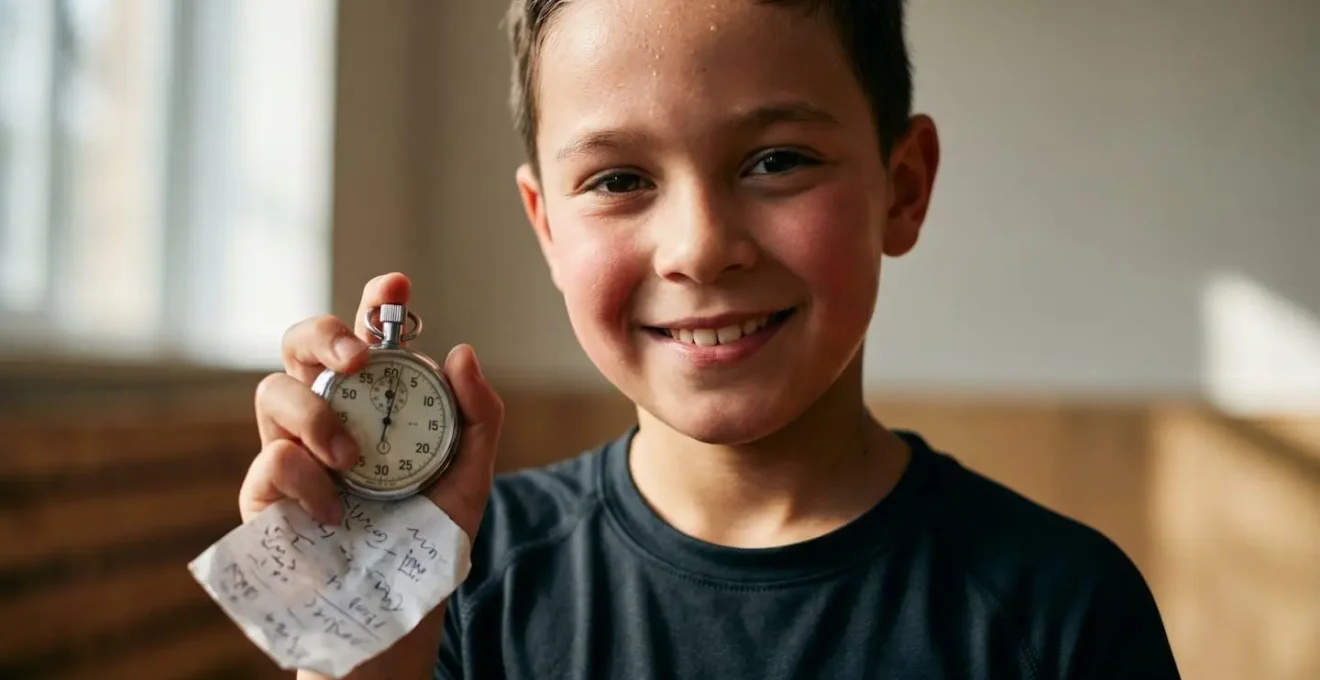
The pride on a child’s face after achieving a physical goal they’ve worked for is a powerful motivator. By celebrating these moments of accomplishment—the mastery of a new skill, a personal best time, or simply the joy of movement—we teach them that health is about feeling good and being capable. This positive reinforcement nurtures a healthy body image and a sustainable, positive relationship with physical activity for life.
How to Create Family Health Habits When Adults and Children Need Different Approaches?
One of the biggest challenges in family health is the « one size fits all » approach. An adult’s structured workout or calorie-conscious meal plan is often inappropriate and unappealing for a child. The key to success is to find a common ground of shared principles, even if the application differs. The most powerful principle is simple imitation. As the CDC notes, « Children imitate adults. Start adding physical activity to your own routine and encourage your child to join you. » This means the focus should be on building shared family routines, not separate regimens.
A highly effective, low-friction method for this is habit stacking, a concept popularised by author James Clear. Instead of trying to find new time for a health habit, you anchor a new, tiny behaviour to an existing, non-negotiable family routine. The goal is to make the new habit so small and easy that it’s harder to skip it than to do it. For example, after the family brushes their teeth at night (the existing habit), you immediately do a 2-minute family stretching session (the new habit). The two become neurologically linked.
This strategy removes the need for motivation and decision-making. You’re not deciding *if* you’ll be active; you’re just following a pre-set sequence. Using environmental cues, like leaving yoga mats by the bathroom door, further automates the process. This approach works because it builds an identity— »we are a family that moves together »—and celebrates consistency over the intensity of any single action.
Habit Stacking in Action: A Practical Strategy
- Identify an anchor: Find a solid, existing routine (e.g., unpacking school bags upon arriving home).
- Stack a tiny habit: Immediately after bags are put away, the new rule is to prepare one fruit or vegetable for the next day’s lunchbox.
- Use environmental cues: Keep a fruit bowl and a child-safe knife right on the counter where bags are unpacked.
- Make it small: Start with just one item, like washing an apple or peeling a carrot. The action should take less than 60 seconds.
- Celebrate consistency: Use a sticker chart to track the « streak » of days the habit is completed, focusing on the process, not the outcome.
By focusing on these micro-habits, you create a ripple effect of positive change that feels manageable for both adults and children, building a culture of health one small, stacked action at a time.
How to Feed 30 Different Plant Foods to Your Gut Bacteria Every Week?
The « 30 plants a week » guideline, stemming from research on gut microbiome diversity, sounds incredibly daunting for any adult, let alone for a family with picky eaters. The mere thought of sourcing and preparing 30 different vegetables, fruits, nuts, seeds, and legumes can be overwhelming. However, the key to achieving this isn’t to create 30 distinct dishes but to adopt a « gateway foods » strategy, packing multiple plants into meals the family already enjoys.
This is about making small, incremental upgrades to your existing food repertoire. A simple smoothie can easily contain 5-7 different plants. A standard Bolognese sauce can be fortified with finely grated carrots, mushrooms, and zucchini without anyone noticing a major change in taste. This approach removes the pressure of a complete dietary overhaul and instead focuses on maximising the nutritional and microbial diversity of every meal. It turns the challenge from « What new thing can I cook? » to « How can I add one more plant to this? »
To make this manageable and even fun, you can use the following ideas as a starting point. Think of them not as recipes, but as platforms for plant diversity. You can also turn it into a game with a colourful chart on the fridge, where each family member gets to add a sticker for every new plant they try each week, fostering a sense of collective achievement.
- Smoothie Base: A foundation of spinach, frozen berries, and a banana can be easily boosted with chia seeds, oat milk, cinnamon, and a spoonful of nut butter, quickly reaching 7+ plants in a single glass.
- Pasta Sauce Upgrade: Your standard tomato and garlic sauce is a perfect vehicle. Sautéing mushrooms, carrots, bell peppers, and zucchini and blending them into the sauce before adding herbs like basil and oregano can pack in 8+ plants.
- Oatmeal Power Bowl: A bowl of oats is a blank canvas. By adding ground flaxseed, walnuts, blueberries, pumpkin seeds, and a drizzle of almond butter, you can start the day with 6-8 plants.
- « Stealth Health » Meatballs: Whether using ground meat or lentils, adding finely grated zucchini, chopped spinach, and herbs like parsley and thyme boosts the plant count of a kid-friendly favourite by 4-5 plants.
By adopting this mindset, hitting the 30-plant target becomes a background process of continuous small improvements rather than a stressful weekly project. It’s a sustainable strategy for nourishing your family’s gut health from the inside out.
Why Children Who Move More Are Often Better at Managing Big Emotions?
Parents of young children are intimately familiar with « big emotions »—the sudden meltdowns, fits of frustration, or waves of anxiety that seem to come out of nowhere. While we often try to reason or talk our way through these moments, we may be missing the most effective tool in our kit: movement. There is a profound and direct link between physical activity and emotional regulation. In fact, according to the CDC Physical Activity Guidelines, physical activity provides not just physical benefits but also improved cognition and reduced symptoms of depression in children.
The neuroscience is compelling. When a child is emotionally dysregulated, their « fight or flight » system is in overdrive. Trying to access the logical, reasoning part of their brain is often futile. However, certain types of movement can directly communicate with the nervous system, helping it shift from a state of high alert to one of calm. Rhythmic activities like swinging or rocking stimulate the vagus nerve, which activates the body’s « rest and digest » calming system. « Heavy work » activities, like pushing a heavy box or carrying a laundry basket, provide deep pressure (proprioceptive) input that is incredibly organising and grounding for a chaotic nervous system.
Instead of seeing a tantrum as a behavioral issue to be disciplined, you can reframe it as a nervous system issue to be soothed. Having a « Movement First Aid Kit » of quick, 2-minute activities can be a game-changer, allowing you to co-regulate with your child and guide them back to a calm state without a word.
Your Movement First Aid Kit: 2-Minute Emotional Regulation Activities
- Wall Pushes: When frustration is high, have the child push against a wall with their full body for 10-15 seconds. This deep pressure input is powerfully calming.
- Animal Walks: A minute of bear crawls or crab walks across the room activates cross-lateral brain coordination, which can interrupt an emotional spiral and shift attention.
- Jump and Freeze: A burst of jumping jacks followed by a sudden command to « freeze! » helps a child practice the crucial skill of impulse control while in an aroused state.
- Heavy Work: Simple chores like carrying a laundry basket, pushing a full shopping cart, or helping to move a small piece of furniture provide grounding sensory input.
- Gentle Rocking: Rhythmic, vestibular input is deeply soothing. This can be on a swing, in a rocking chair, or simply a parent gently rocking a child while standing.
By integrating these tools, you teach your child from a young age that they have power over their emotional state. They learn that when they feel overwhelmed, they can use their own body to find their way back to calm.
Key Takeaways
- Design the Environment, Don’t Police the Behaviour: Your greatest leverage as a parent is in shaping your home and routines to make healthy choices easy and natural, reducing the need for constant rules and negotiations.
- Focus on Health Gains, Not Weight Loss: Shift all conversation away from weight and size. Celebrate what bodies can do—run faster, climb higher, feel more energetic—to build self-esteem and a positive relationship with health.
- Your Calm Is Contagious: A child’s nervous system mirrors their caregiver’s. The most powerful tool for helping a child manage their big emotions is for you to remain calm and regulated yourself.
Why Your Unconscious Reactions Parent Your Children More Than Your Intentions?
We’ve explored nutrition, activity, and screen time, but the thread connecting them all is the parent-child dynamic. You can have the best intentions, the most well-stocked pantry, and a perfectly designed active home, but if your own nervous system is in a state of chronic stress, you will unconsciously sabotage your own efforts. This is the principle of nervous system co-regulation, and it is arguably the most powerful force in parenting.
Think of it like this: your nervous system is a broadcasting station, and your child’s is a receiver, finely tuned to your frequency. When you are stressed, anxious, or rushed, you are broadcasting a signal of threat, even if your words are calm. Your child picks up on this signal—your tense shoulders, your shallow breathing, your sharp tone—and their own nervous system shifts into a state of alert. In this state, they are biochemically incapable of being calm, cooperative, or reasonable. The picky eating, the defiance, the meltdown—these are often symptoms of their nervous system reacting to yours.
Conversely, when you approach a situation with a grounded, calm presence, you broadcast a signal of safety. This allows your child’s nervous system to relax and makes them receptive to connection and guidance. This is why a screaming child will often melt into a parent’s calm, firm embrace. It is not just emotional; it is a physiological process of one nervous system helping to regulate another.
This realisation is both daunting and incredibly empowering. It means that the most important work in raising a healthy child often begins with ourselves. Learning to manage our own stress, to pause before reacting, and to approach conflict with a calm energy is not a « nice-to-have » parenting skill; it is the core mechanism that makes all other strategies work. It’s the foundation upon which a truly healthy family is built.
The journey to raising a healthy child in this challenging world starts not with a new set of rules for them, but with a single, compassionate decision to change the system for your family. Begin today by choosing one small environmental or routine change you can make together, and build from that foundation of shared success.