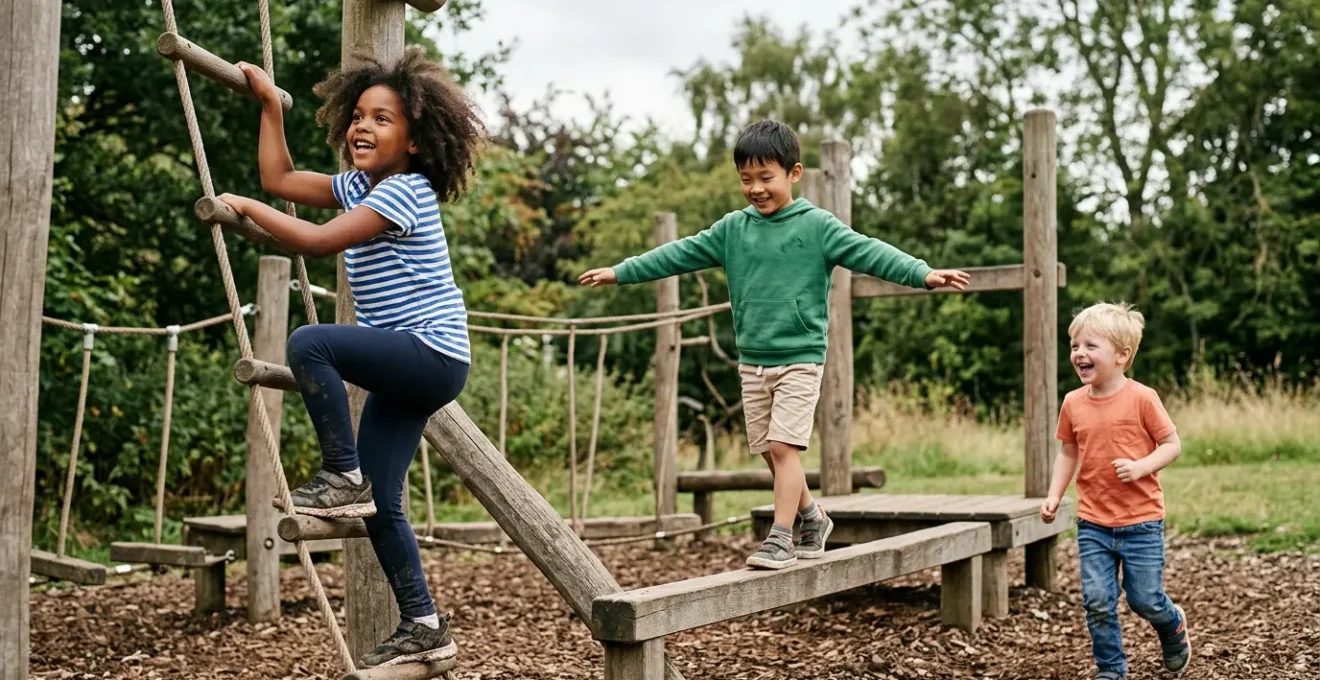
Many parents see active play as something that is simply for developing motor skills or burning off energy. This article reveals a deeper truth: messy, challenging, and even slightly risky physical play is the primary way children’s brains build the neurological pathways for emotional regulation. The body, through its sensory experiences of balance, pressure, and movement, literally teaches the mind how to be resilient.
You’ve seen it a hundred times. A tower of blocks collapses, a crayon snaps, or a sibling grabs a toy, and your child dissolves into a puddle of tears and frustration. As a parent, that feeling of helplessness in the face of a full-blown meltdown is a familiar one. You’ve likely tried all the common advice: distraction, talking it through, a ‘calm-down corner’. These are well-intentioned strategies that focus on the mind, on thinking and reasoning. But often, they fall short when big emotions have taken over.
What if the most powerful tool for building emotional control wasn’t a set of flashcards about feelings, but the climbing frame at the local park? What if messy play with mud and water did more for managing anxiety than a mindfulness app? The prevailing view separates physical development from emotional growth, treating them as two distinct goals. We encourage sport for fitness and motor skills, and we try to teach emotional literacy through conversation. But this misses a profound and fundamental connection.
This guide reveals that physical experience is not just a parallel track to emotional development; it is the very railroad upon which it is built. We will explore the hidden science connecting the sensory feedback from climbing, jumping, and spinning to the brain’s ability to manage stress and frustration. You will discover why taking small, physical risks is essential for building emotional courage and how your own physical presence can be the most effective tool for calming a dysregulated child. It’s time to reframe play not as a break from learning, but as the most essential learning of all.
This article breaks down the essential connections between physical activity and emotional wellbeing, offering a new perspective and practical strategies for parents. Below is a summary of the key areas we will explore to help you foster genuine resilience in your child.
Summary: From Physical Play to Emotional Strength
- Why Children Who Move More Are Often Better at Managing Big Emotions?
- Why Letting Your Child Take Small Physical Risks Builds Emotional Courage?
- How to Use Physical Connection to Help Your Child Calm Down During Meltdowns?
- Why Some Children’s Behaviour Problems Are Actually Sensory Processing Differences?
- How Much Should Children’s Time Be Scheduled Versus Left for Unstructured Play?
- How to Retrain Your Balance and Body Awareness in 5 Minutes Daily?
- What Is Emotional Intelligence Really and Can You Genuinely Develop It as an Adult?
- Why Some People Navigate Life’s Challenges Easily While Others Fall Apart?
Why Children Who Move More Are Often Better at Managing Big Emotions?
The ability to manage emotions begins with the ability to perceive them. This isn’t a cognitive skill, but a physical one, rooted in a sense called interoception: the awareness of the body’s internal signals. It’s how we know we’re hungry, tired, or that our heart is racing with anxiety. When children run, jump, spin, and hang upside down, they are not just exercising their muscles; they are flooding their brain with rich sensory information from their vestibular (balance) and proprioceptive (body position) systems. This intense physical feedback helps them tune into their bodies and sharpen their interoceptive sense.
A child who is highly attuned to their body can notice the subtle physical precursors to an emotional outburst—the tightening in their chest before anger, the flutter in their stomach before fear. This early detection system provides a crucial window of opportunity to self-regulate before the emotion becomes overwhelming. In essence, active physical play is a form of practical training for emotional awareness. The complex coordination and constant adjustments required by dynamic movement create a powerful mind-body feedback loop. As research demonstrates, interventions focused on interoception lead to statistically significant improvements in emotion regulation.
When children learn to control their own body movements, they activate the same part of their brain that is used to control their emotional impulses.
– Eastern Connecticut State University Center for Early Childhood Education, Emotional Health Through Active Play research
Therefore, the child who spends an hour scrambling up a climbing frame is doing more than just building arm strength. They are meticulously calibrating their internal sensory dashboard, learning to read the signals of physical exertion, balance, and slight fatigue. This process of becoming literate in the language of their own body is the bedrock upon which all higher-level emotional regulation is built. They are learning to feel in control of their body, which is the first step to feeling in control of their emotions.
Why Letting Your Child Take Small Physical Risks Builds Emotional Courage?
As a parent, your instinct is to protect. The sight of your child perched precariously high on a climbing frame or running “too fast” down a hill can trigger your own internal alarm bells. Yet, wrapping children in cotton wool to prevent any possibility of a scrape or a fall robs them of essential opportunities to develop emotional courage. Risky play—not to be confused with exposure to genuine hazards—is play that involves a thrilling and exciting level of challenge, where a child feels on the edge of their ability and senses a risk of physical injury, but has the capacity to recognise and manage that risk.
When a child independently decides how high to climb, how fast to swing, or how wobbly a log to cross, they are engaging in a sophisticated process of risk assessment and management. They feel the physiological sensation of fear—the racing heart, the tense muscles—and must decide whether to push forward or retreat. Each time they successfully navigate one of these self-chosen challenges, they learn a profound lesson: “I was scared, but I did it anyway, and I was okay.” This experience builds self-trust and competence.
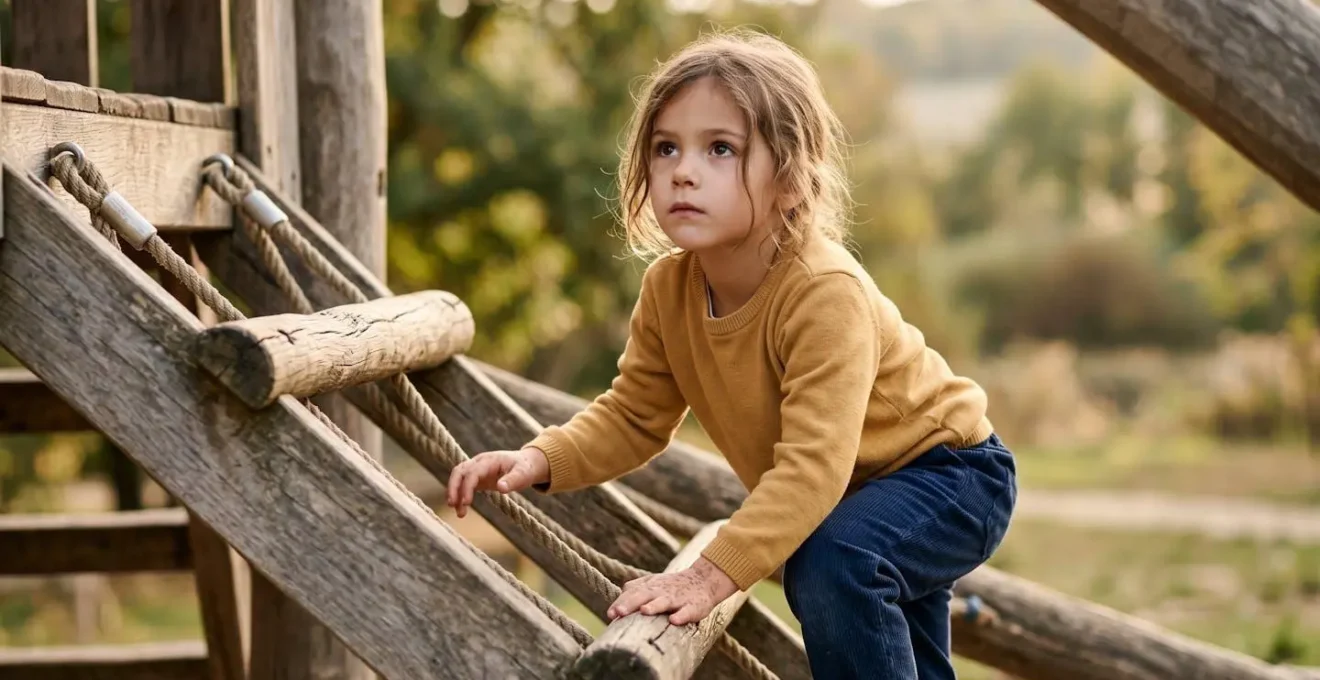
This process is a direct inoculation against anxiety. Instead of avoiding fear-inducing situations, the child learns to approach them, test their boundaries, and develop coping strategies in a low-stakes environment. This is not just a theory; it is backed by robust research. A position statement from the Canadian Paediatric Society highlights that risky play helps children experience uncertainty and coping strategies, which can significantly lower their long-term risk for anxiety disorders. The scraped knee from a bike fall teaches resilience in a way no lecture ever could. It teaches that failure isn’t final and that they have the capacity to recover.
How to Use Physical Connection to Help Your Child Calm Down During Meltdowns?
In the midst of a child’s emotional storm, our words often fail. Trying to reason with a dysregulated child is like trying to shout instructions into a hurricane. This is because a meltdown is a neurobiological event, not a logical one. The “thinking” part of their brain (the prefrontal cortex) is temporarily offline, and the primal, emotional brain has taken over. In these moments, the most powerful tool you have is not your voice, but your own calm, regulated body. This process is called co-regulation.
Co-regulation is the neurological process by which your calm nervous system helps to soothe and organize your child’s chaotic one. This is often transmitted through safe, grounding physical touch. A frantic, light, or ticklish touch can add more noise to an already overwhelmed system. Instead, firm, steady, and predictable pressure—what occupational therapists call “deep pressure touch”—is what signals safety to the brainstem. A bear hug, a firm hand on the back, or even just sitting back-to-back provides powerful proprioceptive input that helps a child feel their body’s boundaries and feel contained when their emotions feel boundless.
Your physical state is contagious. If you approach your child tense, with a racing heart and shallow breath, you will only add fuel to their fire. The first and most critical step is to regulate yourself. Taking a few deep, slow breaths before you engage physically sends a powerful, non-verbal message of safety and calm. Your steady rhythm can neurologically “entrain” their system, helping their heart rate and breathing to slow down to match yours. It is a profound, instinctual form of communication that bypasses the need for words entirely.
Your Action Plan: Deep Pressure for Co-Regulation
- Take three deep breaths yourself before initiating physical contact to ensure your own nervous system is regulated.
- Use firm, steady pressure (bear hug or hand on back) rather than light or ticklish touch which can escalate dysregulation.
- Apply slow, predictable pressure to stimulate proprioceptors and activate the parasympathetic nervous system.
- Maintain calm proximity and steady breathing rhythm to neurologically transmit your regulated state to the child.
- Avoid frantic or rapid movements; instead use organizing touch patterns that signal safety to the brainstem.
Why Some Children’s Behaviour Problems Are Actually Sensory Processing Differences?
Does your child seem to have an endless motor, constantly crashing into furniture and people? Or perhaps they are the opposite, shrinking away from touch, loud noises, and messy hands? Before labelling these behaviours as “naughty,” “hyperactive,” or “overly sensitive,” it’s crucial to look through a sensory lens. For many children, what appears to be a behavioural issue is actually a sign of a sensory processing difference. Their brains are struggling to correctly interpret and respond to the vast amount of sensory information coming from their body and their environment.
Sensory Processing Disorder (SPD) is a neurological condition where the brain has trouble receiving and responding to information that comes in through the senses. While not as well-known as other conditions, studies indicate that 5% to 16% of children exhibit symptoms, a prevalence rate that makes it more common than autism spectrum disorder. A child who is under-responsive to proprioceptive input might seek out intense physical sensations—like crashing and jumping—in a clumsy attempt to feel where their body is in space. A child who is over-responsive to tactile input might have a meltdown when their hands get dirty, as the sensation is perceived by their brain as genuinely painful or threatening.
These are not choices; they are neurological realities. When we misinterpret these sensory-seeking or sensory-avoiding behaviours as willful defiance, we miss the opportunity to help. A clinical study of children with developmental and behavioural concerns found a staggering overlap: up to 64% had identifiable sensory processing difficulties. The research confirmed that these sensory deficits were directly correlated with behavioural problems and parental stress. This suggests that trying to manage the behaviour with sticker charts or time-outs, without addressing the underlying sensory need, is often destined to fail.
Understanding this changes everything. The “hyperactive” child might not need more discipline, but a healthy “sensory diet” of heavy work, like carrying groceries, or deep pressure from a weighted blanket. The “fussy” child might not be defiant, but may need gradual, playful exposure to different textures to help their brain learn to process them. It shifts the parental role from enforcer to detective, seeking to understand and meet the child’s fundamental neurobiological needs.
How Much Should Children’s Time Be Scheduled Versus Left for Unstructured Play?
In a culture that values productivity and measurable achievement, there is immense pressure on parents to fill their children’s schedules. From music lessons and sports clubs to language classes and coding camps, the drive is to provide enriching, structured activities. While these can be valuable, an over-reliance on adult-led, goal-oriented pursuits can inadvertently starve a child of the one thing their developing brain needs most: unstructured, child-led play.
Unstructured play is play without a predetermined goal or a set of adult-enforced rules. It’s making mud pies, building forts from cardboard boxes, or simply lying on the grass and watching the clouds. It may look like “doing nothing” to a busy adult, but it is the brain’s most potent laboratory. It is in these moments of open-ended exploration that children get to practice all the skills we’ve discussed. They get to direct their own sensory diet, climbing when their body needs proprioceptive input, or finding a quiet corner when they feel overwhelmed. They set their own physical risks, deciding how high to build a tower before it becomes “too wobbly.”
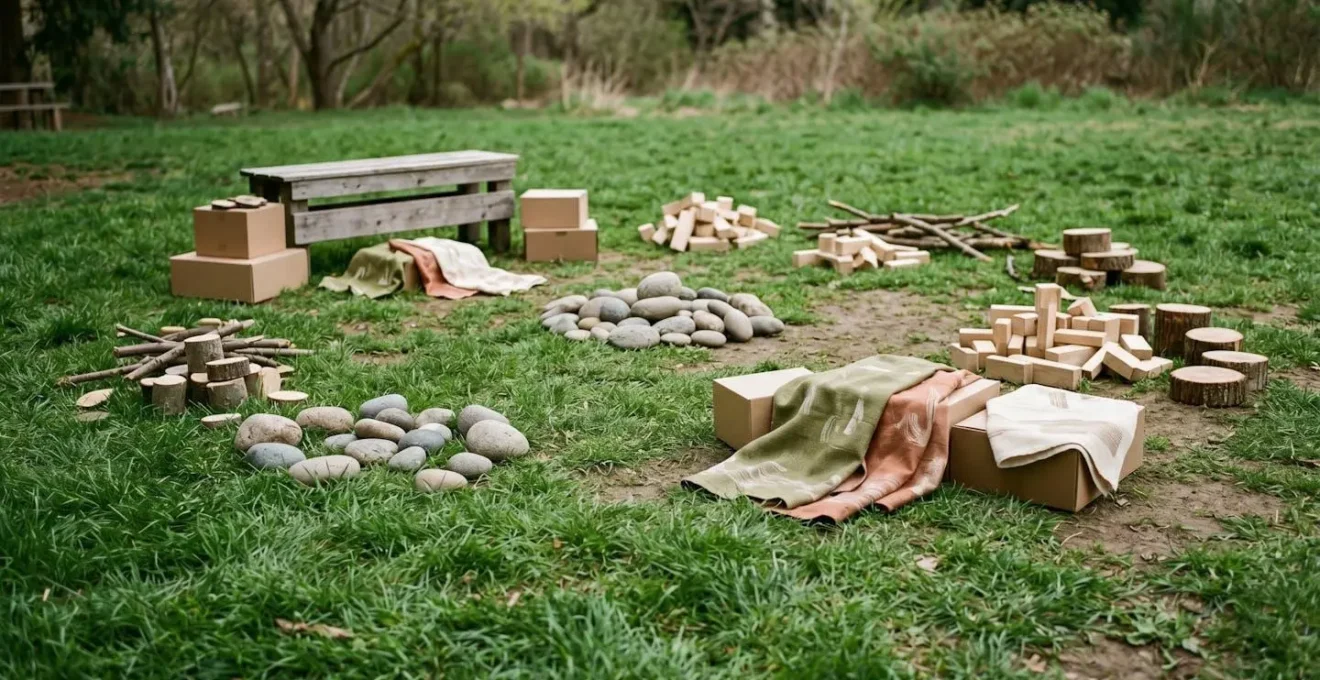
Crucially, unstructured play is the primary training ground for executive functions—the very skills needed for emotional regulation. When a child has an idea for a game, they must plan, negotiate with others, adapt when things go wrong, and manage their frustration to keep the play going. There is no adult to solve their problems or mediate their disputes. This self-directed problem-solving builds a flexible, adaptable, and resilient mind. In contrast, a child whose time is entirely scheduled moves from one set of adult instructions to the next, becoming highly proficient at following directions but less so at directing themselves.
Finding the right balance is key. The goal isn’t to eliminate all scheduled activities but to fiercely protect time for unstructured play. It requires a mental shift from seeing this time as “empty” to recognising it as the most densely packed, nutrient-rich learning experience of a child’s day. It’s about trusting that your child’s innate drive to play is the most sophisticated and effective curriculum there is for building a capable, creative, and emotionally resilient human being.
How to Retrain Your Balance and Body Awareness in 5 Minutes Daily?
As a parent, you are your child’s primary role model and co-regulator. But to effectively “lend” your calm to your child, you must first cultivate it within yourself. Years spent sitting at desks, in cars, and on sofas can dull our own sensory systems. We can become disconnected from our bodies, living mostly in our heads. This makes it much harder to stay grounded during stressful parenting moments. The good news is that just as children build their sensory systems through play, you can retrain and re-awaken your own.
This isn’t about signing up for an intensive yoga course or finding an hour you don’t have. It’s about weaving small, intentional moments of sensory input into your day. By consciously engaging your vestibular and proprioceptive systems, you enhance your own interoceptive awareness. You become better at noticing the subtle signals of your own rising stress—a clenched jaw, shallow breathing—and can respond before you “lose it.” A more regulated parent is a more effective parent. This short, 5-minute practice can be a powerful tool to reconnect you with your own physical self, making you a more present and grounded co-regulator for your child.
Think of it as a “sensory snack” for your own nervous system. By practicing these simple movements, you are not only improving your own balance and body awareness, but you are also gaining a visceral, felt understanding of the sensory world your child inhabits. It builds empathy and strengthens your ability to provide the physical and emotional support your child needs. It’s a small investment of time with a profound return for both you and your family.
Action Plan: 5-Minute Daily Practice for Parents
- Minute 1: Single-Leg Balance. Stand and balance on one leg for 30 seconds, then switch. This directly activates your vestibular system and improves your sense of grounding.
- Minute 2: Slow Rotations. Stand with feet shoulder-width apart and slowly twist your torso from side to side, or do slow spins (5 in each direction). This tunes your proprioceptive awareness.
- Minute 3: Body Scan. Stand still with your eyes closed. Mentally scan your body from your feet to your head, simply noticing the internal sensations without judgment. This is an interoception workout.
- Minute 4: Mimic Your Child. For 60 seconds, try a movement your child loves—crawling, spinning, or gentle jumping. This builds a felt understanding of the sensory input they seek.
- Minute 5: Deep Pressure & Breath. Place your hands firmly on your own shoulders or thighs, applying steady pressure. Practice slow, deep breathing, strengthening your ability to self-regulate.
What Is Emotional Intelligence Really and Can You Genuinely Develop It as an Adult?
Emotional intelligence (EI) is often discussed in abstract terms: self-awareness, empathy, and social skills. But at its core, EI is not a soft skill; it is a biological one, rooted in the very same interoceptive awareness we foster in children through physical play. It is the ability to accurately perceive the physical sensations of an emotion in yourself, understand its cause, and then choose how to respond. If you can’t feel it, you can’t manage it. Therefore, developing emotional intelligence as an adult starts not with reading a book, but with reconnecting with your body.
The 5-minute daily practice is a direct method for developing EI. By practicing balance, body scans, and deep pressure, you are sharpening your ability to listen to your body’s signals. You are moving from a state of being “numb” from the neck down to becoming a fluent reader of your own internal landscape. This somatic literacy is transformative. It allows you to catch anxiety when it’s just a flutter in your stomach, not a full-blown panic attack. It allows you to feel the build-up of anger as tension in your shoulders, giving you the chance to take a deep breath before you snap.
This is not just self-help theory; your capacity for emotional regulation has a direct and measurable impact on your children. The way you model and manage your own emotions sets the blueprint for their own developing nervous systems. Children of parents who are dysregulated are neurologically wired for a similar pattern of emotional response. This connection underscores the profound responsibility and opportunity that comes with parenthood.
Case Study: Parental Regulation and Child Development
Research from Griffith University provides powerful evidence for this link. A study found that parents who struggle with emotional regulation often have children with similar deficits. The study highlights that positive “parent-child synchrony”—the attuned, responsive dance of interaction—is directly correlated with the child’s ability to self-regulate. Conversely, children who experience unresponsive parenting can develop deficits in recognising their own bodily sensations and have fewer self-regulation strategies. It demonstrates that a parent’s ability to be an emotionally and interoceptively aware co-regulator is a primary factor in raising a regulated child.
So, can you genuinely develop emotional intelligence as an adult? The answer is an emphatic yes. But the path isn’t through intellectualising your feelings. It’s through the daily, humble practice of paying attention to your body. It’s in the deep breath, the moment of balance, the conscious release of a clenched jaw. By doing this for yourself, you are giving the greatest possible gift to your child: a calm, present, and regulated parent.
Key Takeaways
- The body teaches the mind: Physical awareness (interoception) gained through play is the foundation of emotional awareness.
- Manageable physical risks build emotional courage. Each self-chosen challenge overcome is a direct deposit into a child’s resilience bank account.
- Unstructured, child-led play isn’t ’empty time’; it’s the essential laboratory where children practice sensory regulation, problem-solving, and emotional control.
Why Some People Navigate Life’s Challenges Easily While Others Fall Apart?
The ultimate goal of parenting is not just to raise a happy child, but to raise an adult who is resilient, capable, and able to navigate the inevitable storms of life. Why is it that some individuals seem to weather setbacks with grace, while others crumble at the first sign of adversity? The foundations of this resilience are not laid in adolescence or adulthood, but in the earliest years of play. The childhood experiences we provide create the very architecture of the brain’s stress-response system.
A childhood rich in self-directed, physical, and even risky play builds a fundamentally different brain than one dominated by structured, adult-led instruction. The long-term consequences of these different approaches are staggering. While it may seem like a stretch to connect preschool activities to adult life outcomes, the evidence suggests a powerful link. In a landmark study, researchers followed children from instruction-oriented preschools versus play-oriented ones. The results were dramatic: a 1997 study found that by age 23, those from instruction-heavy backgrounds had a significantly higher rate of felony arrests compared to their peers from play-based programmes.
This isn’t to say that play-based preschools are a silver bullet against all of life’s problems. Rather, it illustrates a profound truth: a childhood that allows for exploration, negotiation, problem-solving, and the mastering of self-perceived risks fosters the core life skills of adaptability and self-regulation. These are the very skills that are protective against poor life outcomes. The child who learns to manage the “crisis” of a collapsing block tower is practicing the same emotional regulation circuit they will one day need to manage a job loss or a relationship breakdown.
So, the next time you see your child covered in mud, perched “too high” on a tree branch, or utterly absorbed in a seemingly pointless game of their own invention, take a moment. Resist the urge to clean them up, call them down, or redirect them to something more “productive.” Recognise that you are not witnessing time being wasted. You are witnessing the vital, foundational work of a human being building a resilient mind, one messy, joyful, and courageous physical experience at a time. You are watching them become a person who, when faced with life’s challenges, will be more likely to navigate them with strength rather than fall apart.